Robinia pseudoacacia
Robinia honoring Jean Robin (1550–1629) and his son Vespasien Robin (1579–1662), royal gardeners to the French kings Henri III, Henri IV, and Louis XIII, who first cultivated the tree in Europe from seeds sent from Virginia. pseudoacacia from Greek pseudēs (false) + akakia (acacia), because the compound leaves and thorns superficially resemble those of true acacias (Acacia), to which it is not closely related.
Black Locust
Fabaceae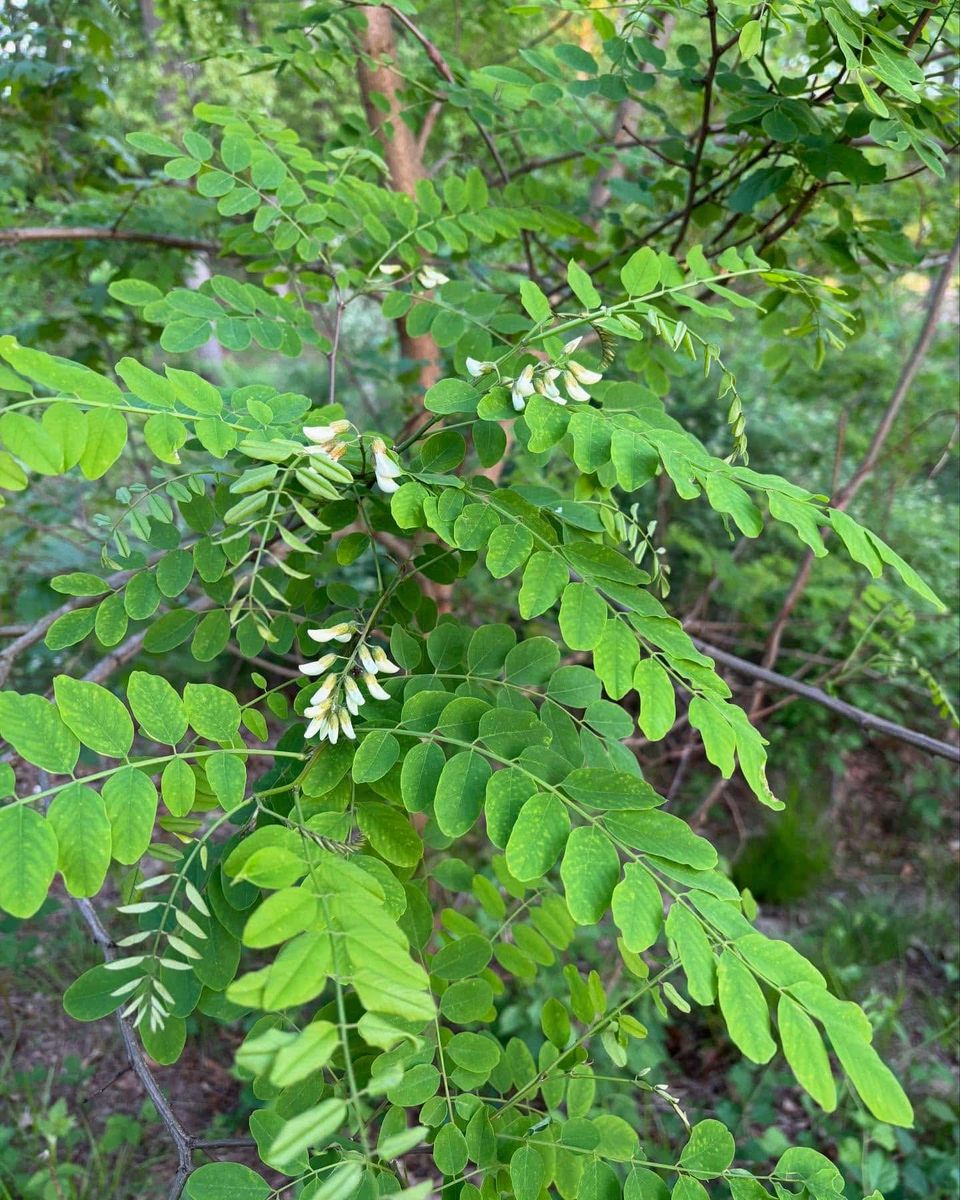
Distinguishing Features
- Leaves alternate , odd- pinnately compound, 15–35 cm long, with 7–21 oval to elliptic leaflets (2–5 cm each), dark blue-green above, paler below; leaflets fold shut at night ( nyctinasty )
- Paired sharp stipular spines (modified stipules ) at the base of each leaf, especially prominent on young growth and suckers — up to 2.5 cm long
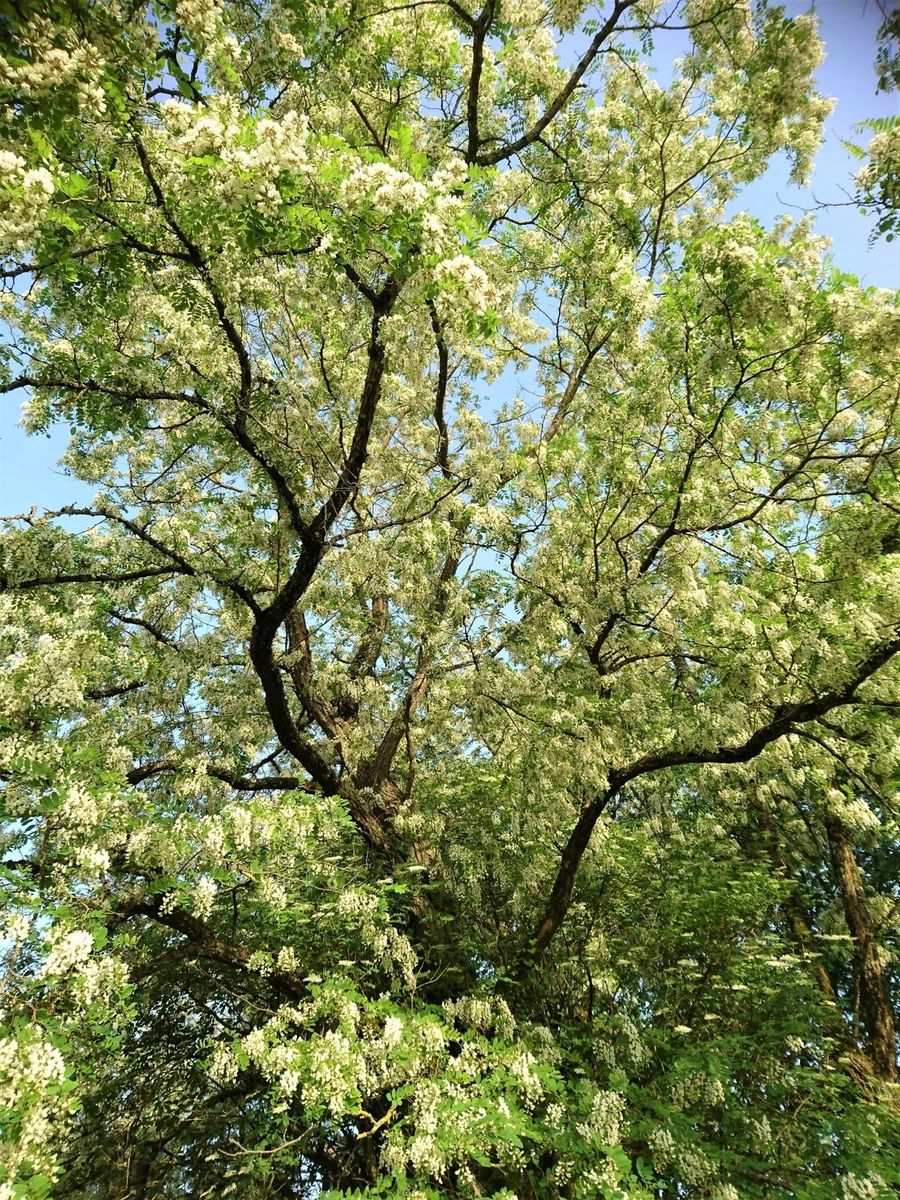
- Flowers white with a yellow blotch on the standard petal, papilionaceous (butterfly-shaped), intensely fragrant, in dense, pendant racemes 10–20 cm long
- Fruit a flat, smooth, dark brown legume pod (5–10 cm long) containing 4–10 hard seeds; pods persist on the tree into winter
- Bark deeply furrowed with interlacing ridges, dark grey-brown; trunk often forked or irregular
- Medium to large deciduous tree, 12–25 m tall; crown open and irregular; spreads aggressively by root suckers, forming dense clonal thickets
Habitat
Roadsides, forest edges, disturbed ground, abandoned fields, railway embankments, riverbanks, and dry rocky slopes. Thrives on poor, dry soils due to nitrogen-fixing root nodules. Tolerant of drought and pollution, making it common in urban areas.
Notes
An important early-successional tree that fixes atmospheric nitrogen via symbiotic Rhizobium bacteria in root nodules, enriching nutrient-poor soils. The very hard, rot-resistant wood was historically prized for fence posts, ship nails, and tool handles. Flowers are edible and used for fritters and infusions in European cuisine. However, bark, seeds, and leaves contain the toxalbumin robin (a lectin) and are toxic to humans and livestock. Highly invasive outside its native Appalachian range — aggressive root suckering and nitrogen fixation allow it to colonize and transform nutrient-poor habitats, displacing native vegetation. One of the first North American trees introduced to Europe (early 1600s).