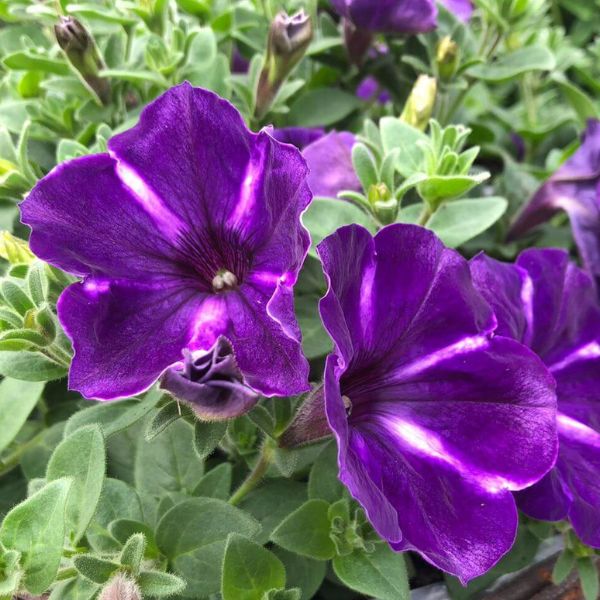
Solanaceae
Nightshade Family
Order: Solanales ~100 genera, ~2,500 speciesDefining Characteristics
- Flowers typically with 5 fused petals (sympetalous) forming a tubular, funnel-shaped, rotate, or campanulate corolla ; 5 fused sepals ; 5 stamens alternating with corolla lobes
- Leaves alternate , simple (though sometimes deeply lobed or pinnately compound); no stipules
- Fruit a berry (tomato, pepper) or capsule (petunia, tobacco); often many-seeded
- Many species produce tropane alkaloids, nicotine, capsaicin, or steroidal glycoalkaloids — defensive compounds with diverse pharmacological effects
- Growth forms highly diverse: annuals , perennials , shrubs, small trees, and vines
- Ovary superior, typically 2-carpellate with a single style
Notable Genera
- Solanum (potato, tomato, eggplant, nightshades — ~2,000 species)
- Capsicum (peppers)
- Nicotiana (tobacco)
- Petunia (petunias)
- Datura (jimsonweed, thorn-apple)
- Atropa (deadly nightshade / belladonna)
- Physalis (ground cherry, tomatillo)
- Lycium (wolfberry, goji)
Notes
One of the most economically important plant families, providing staple food crops (potato, tomato, pepper, eggplant), stimulants (tobacco), ornamentals (petunia, Brugmansia), and historically significant medicinal and poisonous plants (belladonna, henbane, mandrake). The family is notable for its alkaloid chemistry — many species are toxic, and the line between food, medicine, and poison is often a matter of species and dosage. Petunias are the world's most popular bedding plant by volume.