Petunia × hybrida
Petunia from French pétun, from Tupi-Guarani petun (tobacco), reflecting the close relationship between petunias and tobacco within Solanaceae — both genera share similar tubular flowers. hybrida from Latin hybrida (mongrel, hybrid), indicating the plant's origin from crossing two wild species.
Petunia (Surfinia Series)
Solanaceae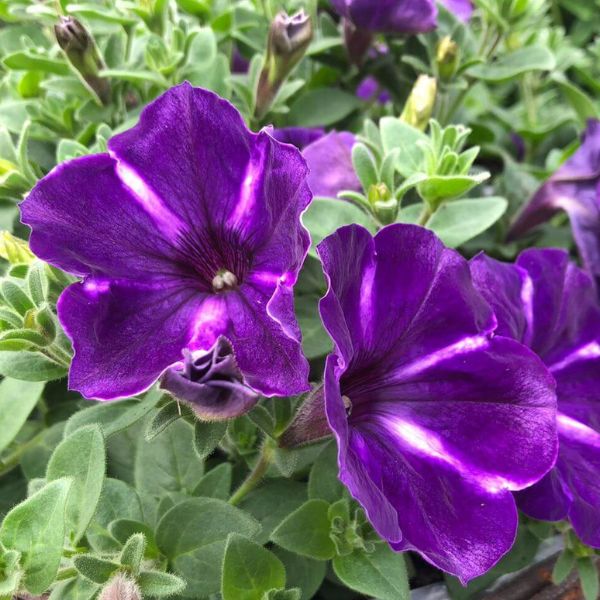
Distinguishing Features
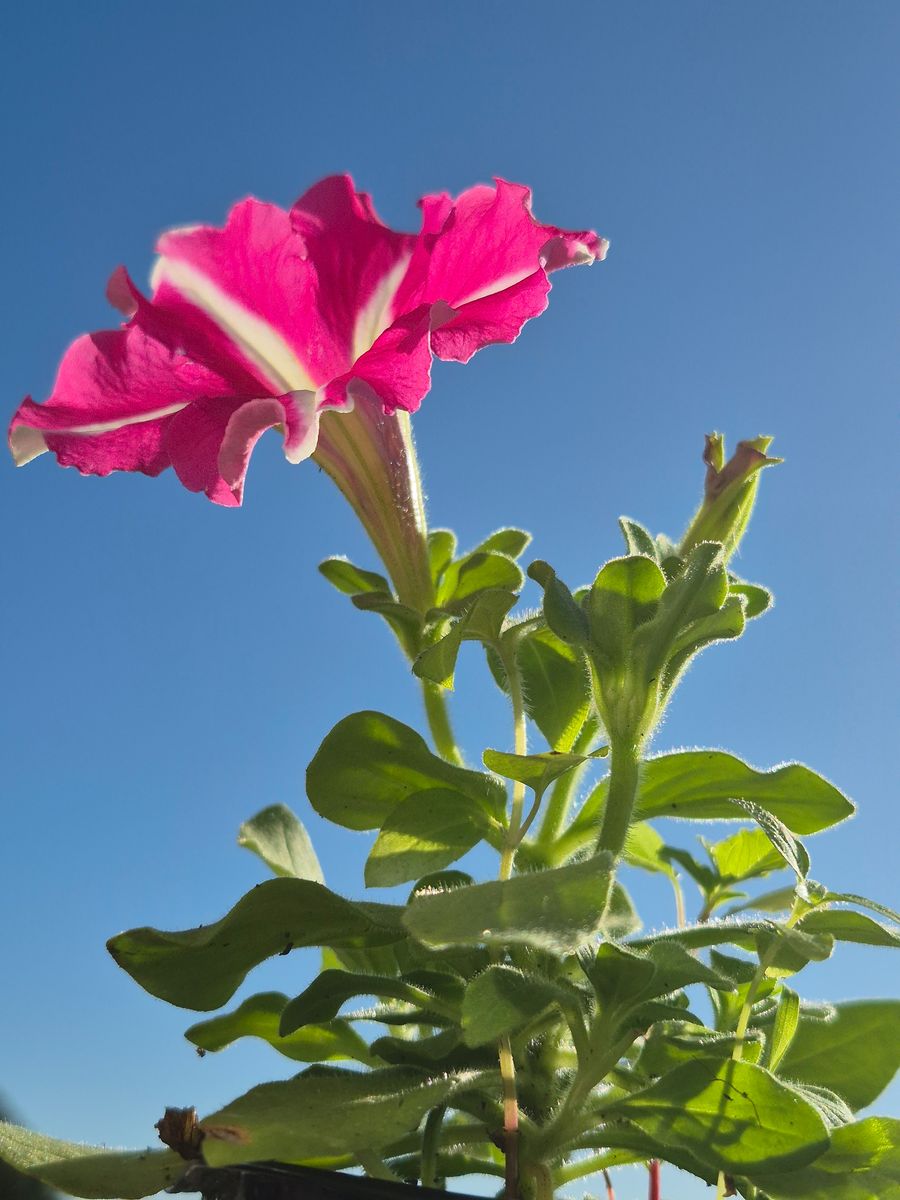
- Flowers large (5–10 cm across), funnel-shaped (salverform) with 5 fused petals, often with wavy or ruffled margins; color range extremely broad — purple, pink, red, white, yellow, bicolor, and striped
- Surfinia cultivars specifically have a vigorous trailing to cascading habit, with stems up to 1–1.5 m long, making them ideal for hanging baskets and containers
- Leaves ovate to elliptic, 3–8 cm long, entire , somewhat sticky and hairy (glandular- pubescent ); both leaves and stems have a distinctive clammy feel
- Stems soft, herbaceous, branching freely; the whole plant is covered in fine, sticky glandular hairs
- Calyx of 5 deeply lobed , narrow sepals , persistent in fruit
- Fruit a small capsule containing numerous tiny seeds (dust-like, <1 mm)
Habitat
Cultivated worldwide as a bedding plant, in hanging baskets, containers, window boxes, and garden borders. Not naturalized in the wild in temperate regions. Parent species are native to South American grasslands and rocky slopes.
Notes
The world's most popular bedding plant by commercial volume. Surfinia was the first trailing petunia series, developed in Japan by Suntory in the late 1980s through breeding with wild Petunia species — it revolutionized container gardening with its vigorous, spreading growth and continuous flowering without deadheading. All garden petunias are hybrids derived primarily from the cross between the white, night-fragrant P. axillaris and the purple P. integrifolia. Petunia is an important model organism in plant genetics, particularly for studies of flower color, transposable elements, and flavonoid biosynthesis.