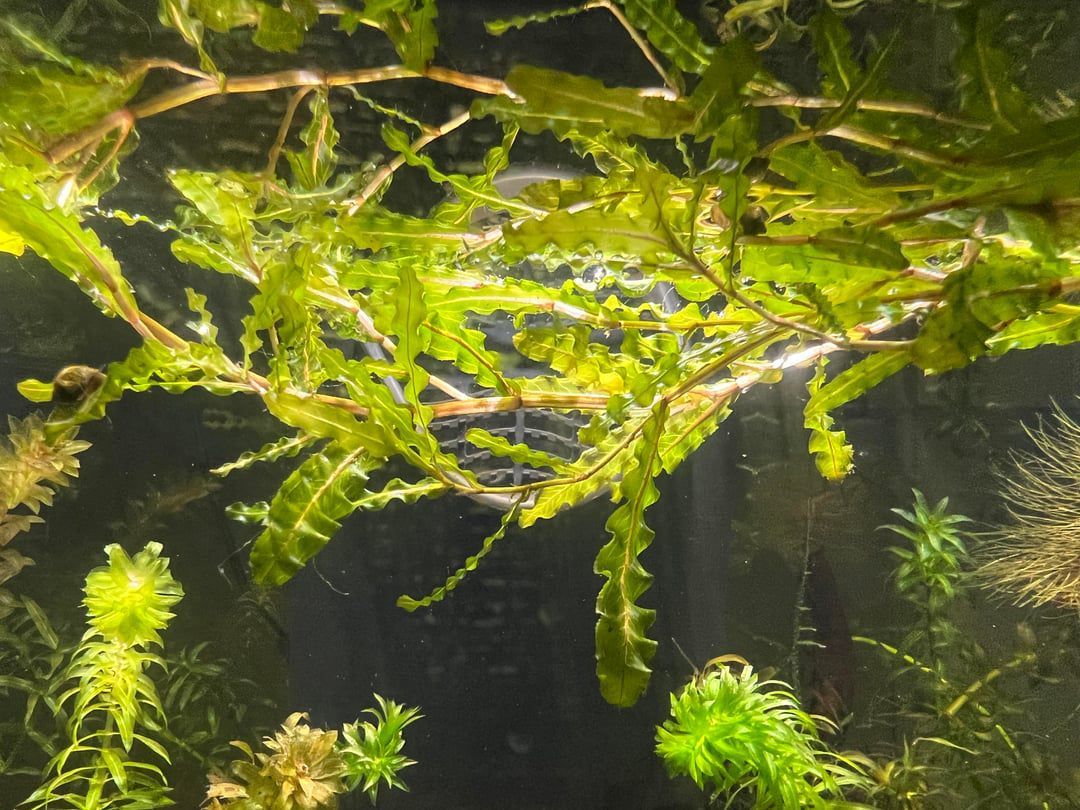
Potamogetonaceae
Pondweed Family
Order: Alismatales ~6 genera, ~110 speciesDefining Characteristics
- Aquatic herbs, usually perennial , fully submerged or with floating leaves; stems elongated or shortened, rooted in sediment
- Leaves alternate or opposite , linear to broadly ovate; submerged leaves often thin and translucent, floating leaves leathery with a distinct petiole
- Flowers small, bisexual, in axillary or terminal spikes that often emerge above the water surface; typically 4 tepals, 4 stamens , and 4 free carpels
- Fruit a small drupe or achene -like nutlet, often with a short beak
- Many species produce turions (specialized vegetative buds) for overwintering and asexual reproduction
- Rhizomes frequently present, anchoring plants in substrate
Notable Genera
- Potamogeton (pondweeds — ~100 species, the dominant genus)
- Stuckenia (sheathed pondweeds)
- Groenlandia (opposite-leaved pondweed)
- Zannichellia (horned pondweed)
Notes
Ecologically critical family in freshwater ecosystems worldwide. Pondweeds provide food for waterfowl (seeds and tubers are key food sources for ducks and geese), habitat for fish and invertebrates, and oxygenate the water column. Several species, particularly Potamogeton crispus, are invasive outside their native ranges. Identification often requires both submerged and floating leaves, as many species exhibit marked leaf dimorphism.