Potamogeton crispus
Potamogeton from Greek potamos (river) + geiton (neighbor), referring to the aquatic habitat alongside rivers. crispus from Latin crispus (curled, wavy), describing the distinctively crimped leaf margins.
Curly-leaf Pondweed
Potamogetonaceae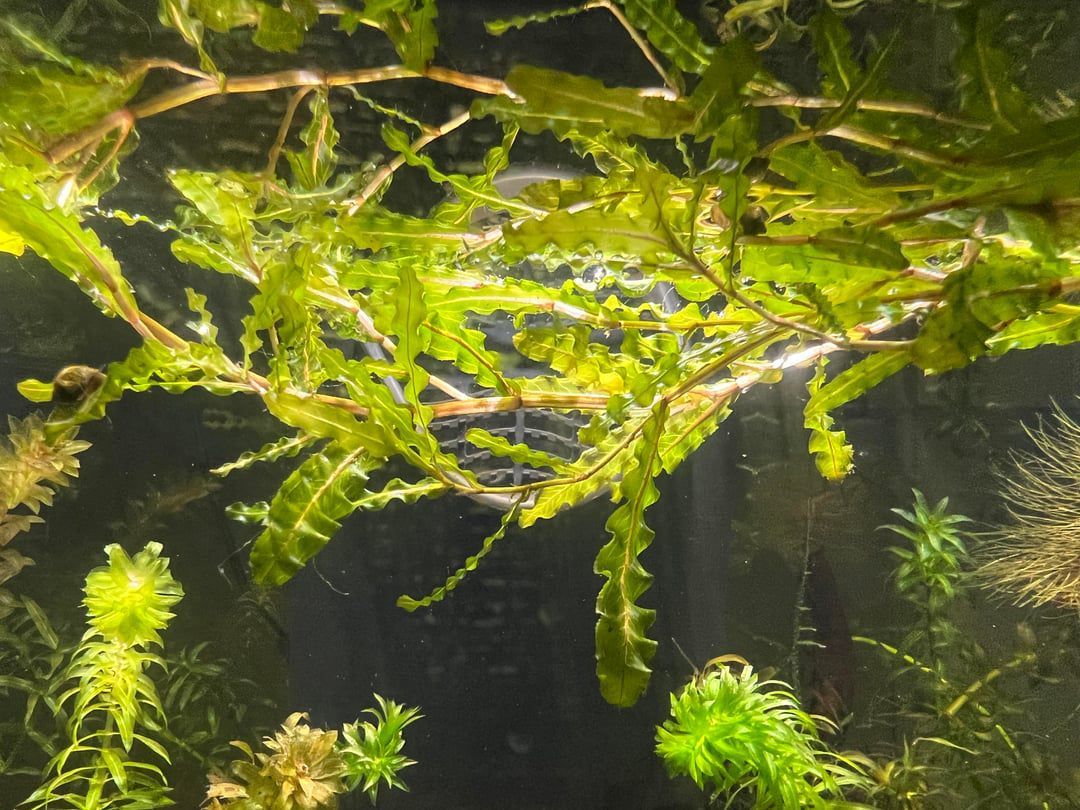
Distinguishing Features
- Leaves entirely submerged, alternate , sessile , oblong to linear, 2.5–9.5 cm long and 5–12 mm wide, with distinctly wavy ( undulate ) and finely serrate margins — resembling lasagna noodles
- Leaves olive-green to reddish-brown, thin and translucent, with a prominent midrib and 3–5 parallel veins
- Stem flattened, branching, up to 1 m long, rooted in sediment by slender rhizomes
- Flower spike small, inconspicuous, on a short stalk emerging just above the water surface; 4 tiny flowers per spike
- Produces hard, burr-like turions (vegetative propagules) in late spring — compact clusters of hardened, modified leaves that detach, sink, and overwinter in sediment
- Unique phenology: grows actively through winter under ice, reaches peak biomass in late spring, then dies back in summer heat — opposite to most native aquatic plants
Habitat
Lakes, ponds, slow-moving rivers, streams, ditches, and canals. Tolerates turbid, nutrient-rich, and slightly brackish water. Often found in disturbed or eutrophic water bodies where it can form dense monospecific beds.
Notes
One of the most problematic invasive aquatic plants in North American lakes. Its winter-active growth cycle gives it a competitive advantage over native pondweeds, which are dormant in winter. Dense beds can impede boating, clog water intakes, and alter nutrient cycling. When the plants die back en masse in early summer, decomposition can cause oxygen depletion and algal blooms. Turions are the primary means of spread and can remain viable in sediment for multiple years. Despite its invasive status, it provides some ecological value as food for waterfowl and habitat for fish and invertebrates during the spring months.