Araceae
Arum Family
Order: Alismatales ~140 genera, ~3,750 speciesDefining Characteristics
- Inflorescence a spadix (fleshy spike bearing tiny flowers) enclosed or subtended by a spathe (modified bract )
- Leaves often large, with net-like or parallel venation; petioles long, frequently with a sheathing base
- Many species contain calcium oxalate crystals (raphides) causing irritation if ingested
- Growth forms diverse: terrestrial herbs, epiphytes , rheophytes, climbers, floating aquatics, and submersed aquatics
- Fruit usually a berry
- Latex or mucilage often present
Notable Genera
- Philodendron (philodendrons)
- Monstera (Swiss cheese plant)
- Alocasia and Colocasia (elephant ears, taro)
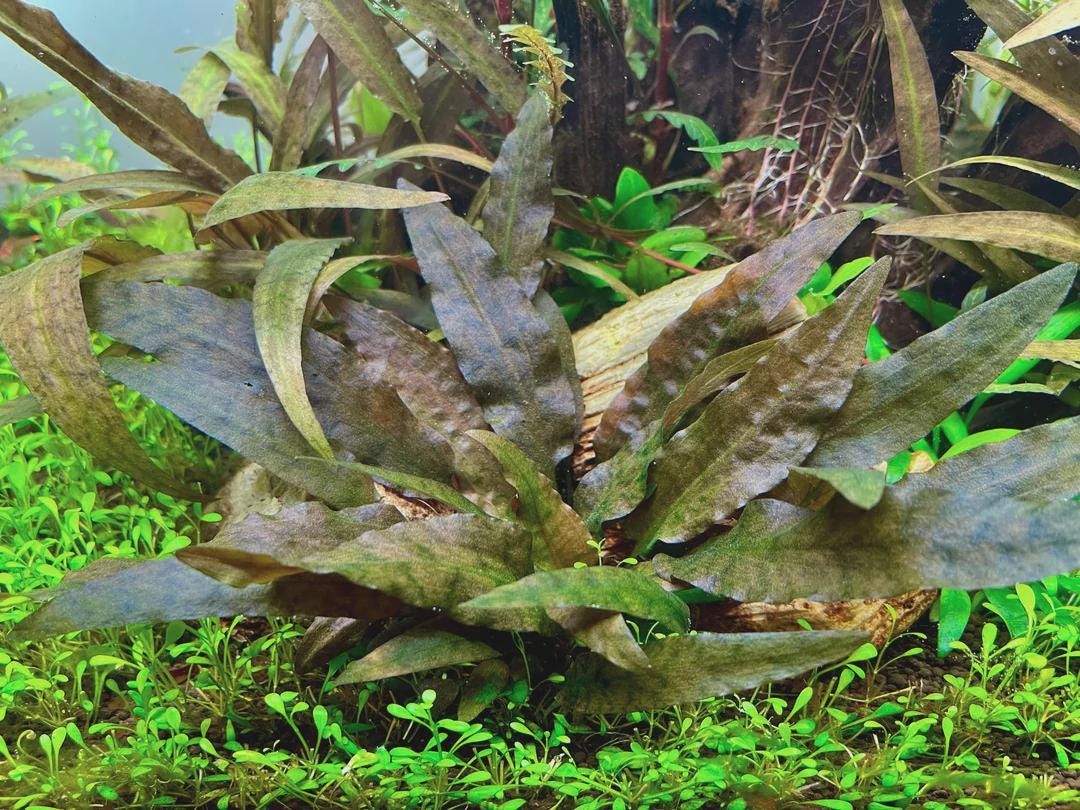
- Cryptocoryne (water trumpets — aquatic)
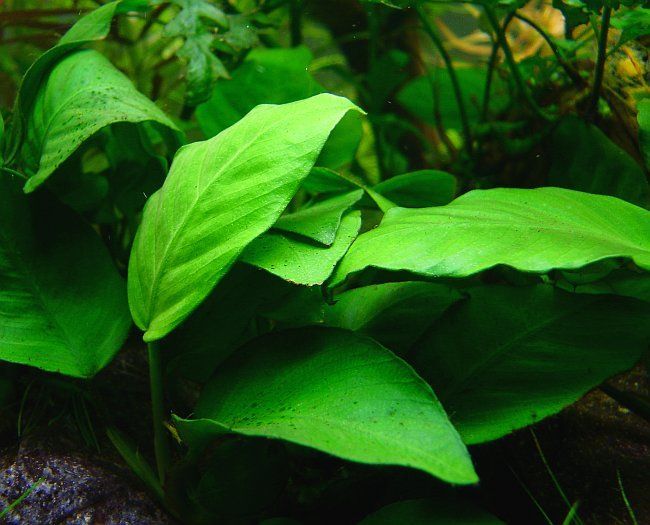
- Anubias (anubias — aquatic)
- Lemna and Wolffia (duckweeds — the smallest flowering plants)
- Anthurium (anthuriums)
- Spathiphyllum (peace lily)
Notes
One of the most diverse plant families in growth form — includes the world's smallest flowering plants (Wolffia, <1 mm) and plants with the largest unbranched inflorescence (Amorphophallus titanum). Many important houseplants (Monstera, Philodendron, Pothos). Several genera are staple aquarium plants (Cryptocoryne, Anubias, Bucephalandra). Taro (Colocasia esculenta) is a major food crop in the tropics. Calcium oxalate crystals make many species toxic if eaten raw.