Monstera deliciosa
Monstera from Latin monstrum (monster) or monstrosus (monstrous, abnormal), referring to the unusual appearance of the large, perforated leaves. deliciosa from Latin deliciosus (delicious), referring to the edible fruit.
Swiss Cheese Plant
Araceae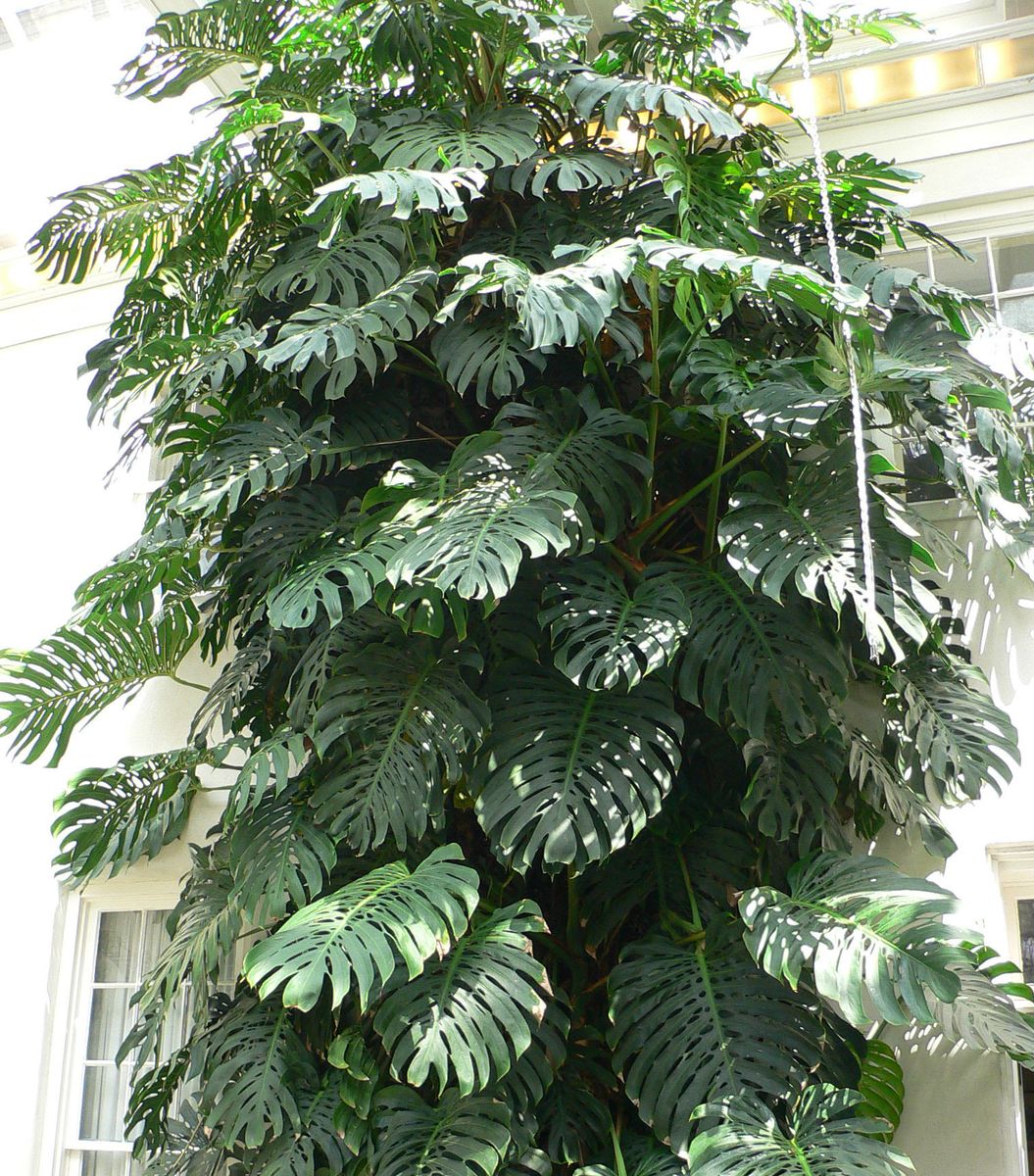
Distinguishing Features
- Leaves very large (up to 90 cm long), leathery, glossy dark green, heart-shaped in outline, developing distinctive fenestrations (elliptical holes) and deep pinnate splits as the plant matures — juvenile leaves are entire (unperforated)
- Growth habit a hemiepiphytic vine: begins life as a terrestrial seedling, climbs trees via thick aerial roots , and may lose connection to the ground — or starts as an epiphyte and sends roots down
- Thick, rope-like aerial roots produced at each node, used for climbing, anchoring, and absorbing moisture; will root into soil if they reach the ground
- Inflorescence a cream-white spadix (10–15 cm) enclosed by a boat-shaped white spathe , typical of Araceae
- Fruit a cylindrical, cone-like structure (up to 25 cm) covered in hexagonal green scales; ripens unevenly over several months, tasting like a blend of pineapple and banana when ripe
- Stem thick (up to 7 cm diameter), green, with prominent leaf scars and internodes
Habitat
Tropical rainforests, growing as an understory to canopy climber on tree trunks. Prefers humid, shaded to partially lit conditions at low to mid elevations (0–1,000 m). Commonly cultivated as a houseplant worldwide.
Notes
One of the most iconic and popular houseplants globally. The fenestrations are thought to optimize light capture on the forest floor by allowing sunlight to pass through to lower leaves (the 'swiss cheese' appearance). Contains calcium oxalate crystals throughout the plant — all parts except the fully ripe fruit are irritating if ingested. The ripe fruit (ceriman) is edible and considered a delicacy in its native range, but unripe fruit causes intense mouth and throat irritation. Formerly classified as Philodendron pertusum. Can become invasive in tropical areas outside its native range.