Larix laricina
Larix from Latin larix (larch), possibly derived from a Celtic word meaning 'fat' or 'resinous.' laricina meaning 'larch-like,' from Latin larix + -ina (resembling).
Tamarack
Pinaceae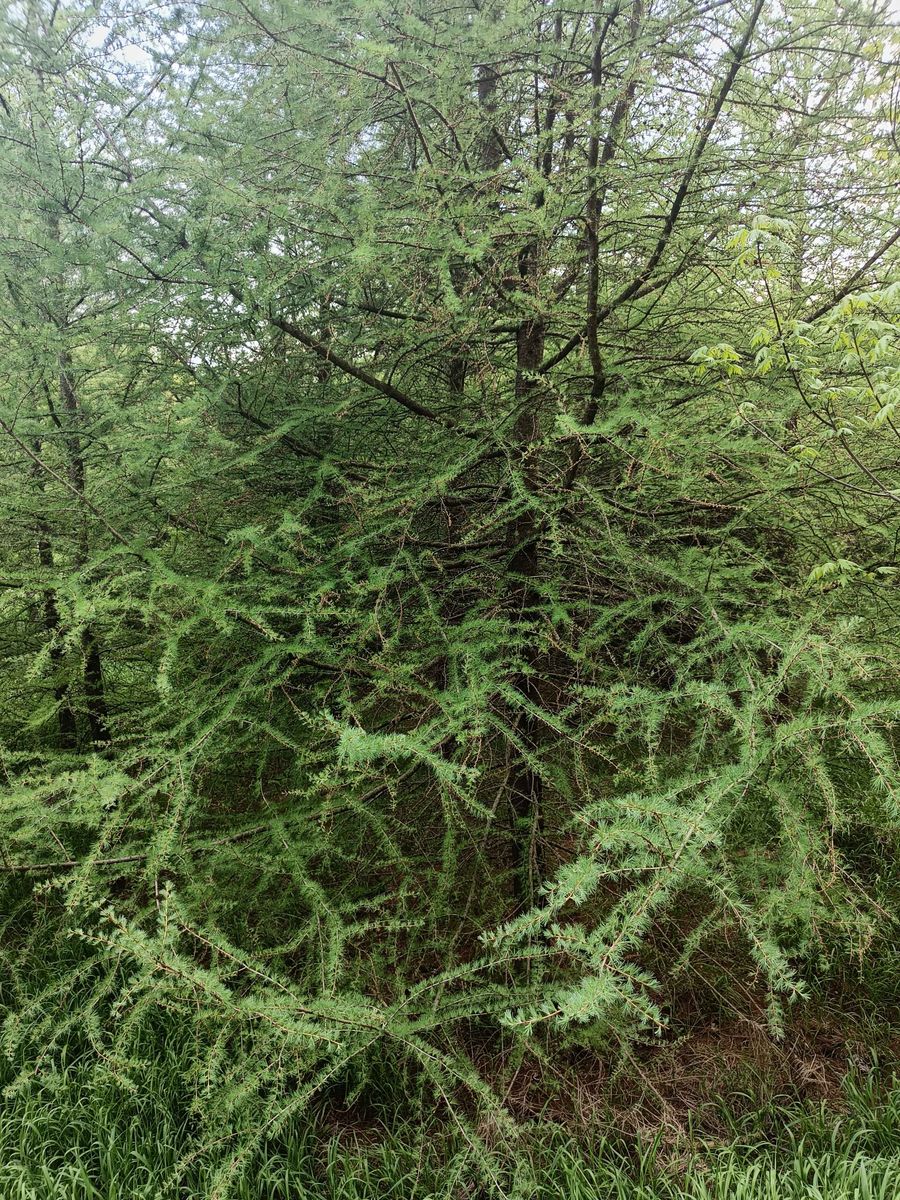
Distinguishing Features
- Deciduous conifer — needles turn golden yellow and drop in autumn, unique among native northeastern conifers
- Needles soft, flexible, 2–3 cm long, in clusters (fascicles) of 10–20 on short spur shoots (also singly on new long shoots)
- Small upright oval cones, 1–2 cm long, with thin rounded scales — persist on branches after seed release
- Bark thin, gray and smooth when young, becoming reddish-brown and scaly with age
- Narrow, open conical crown; trunk straight and tapered; branches often slightly drooping
- Medium tree typically 15–20 m tall; trunk often buttressed at base in wet sites
Habitat
Bogs, fens, swamps, and poorly drained muskegs. Also found on moist upland sites in the north. Characteristic tree of boreal peatlands — tolerates acidic, waterlogged soils.
Notes
One of only a few deciduous conifers in North America (along with Taxodium, bald cypress). The autumn golden display in boreal bogs is striking. Extremely cold-hardy — survives temperatures below -60°C, making it one of the most cold-tolerant trees on Earth. Wood is rot-resistant and was traditionally used for boat ribs, fence posts, and snowshoe frames. Indigenous peoples used the roots for sewing birch bark canoes (watap). Often grows with black spruce in peatlands but distinguished by its deciduous habit and clustered soft needles.