Hypericum perforatum
Hypericum from Greek hyperikon, possibly from hyper (above) + eikon (image or icon), as the plant was hung above doorways to ward off evil spirits. perforatum from Latin perforatus (perforated), referring to the translucent oil glands in the leaves that look like tiny holes when held to the light.
St. John's Wort
Hypericaceae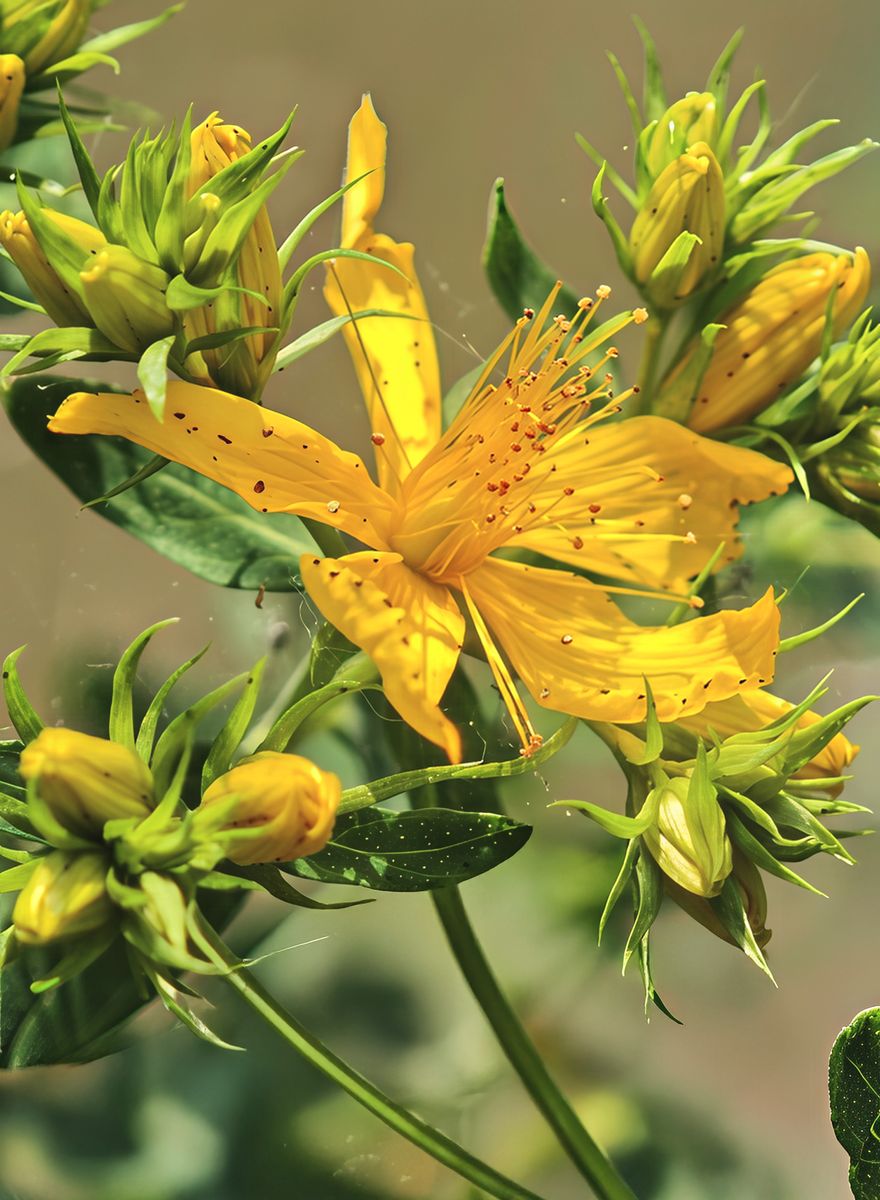
Distinguishing Features
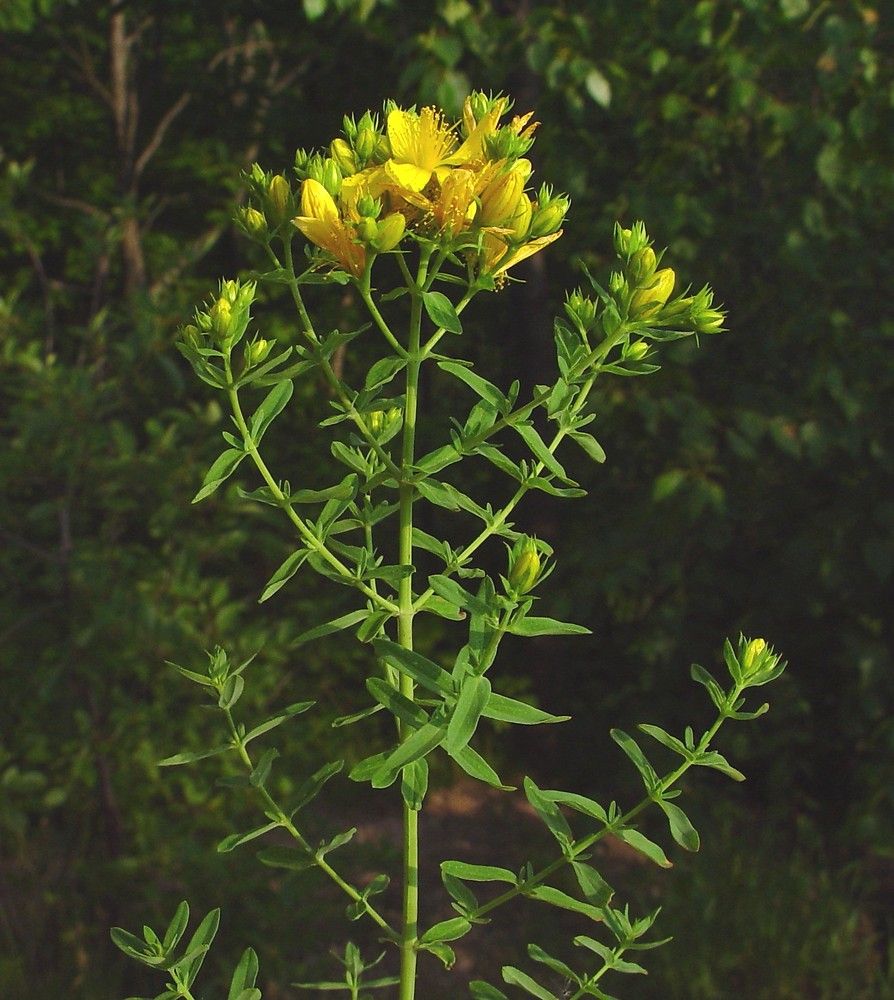
- Opposite , sessile , oblong leaves with numerous translucent dots (oil glands) visible when held to light — key diagnostic feature
- Bright yellow 5-petaled flowers with black dots along petal margins
- Stamens numerous and conspicuous, arranged in 3 bundles
- Blooms around the feast of St. John the Baptist (June 24)
- Crushed flowers and buds stain fingers red-purple (hypericin pigment)
- Two raised ridges running along each side of the stem
Habitat
Meadows, roadsides, pastures, waste areas, and open woodlands. Prefers well-drained soils in full sun.
Notes
One of the most studied medicinal herbs — standardized extracts are widely used for mild to moderate depression. Contains hypericin and hyperforin, which cause photosensitivity in livestock (hypericism). Classified as a noxious weed in many jurisdictions.
Tags
Biogeography
Life Form
Phenology
Ethnobotany