Viola sororia
Viola from Latin viola (violet, the plant and the color). sororia from Latin soror (sister), meaning 'sisterly' or 'closely resembling,' referring to its similarity to other violet species in the genus.
Common Blue Violet
Violaceae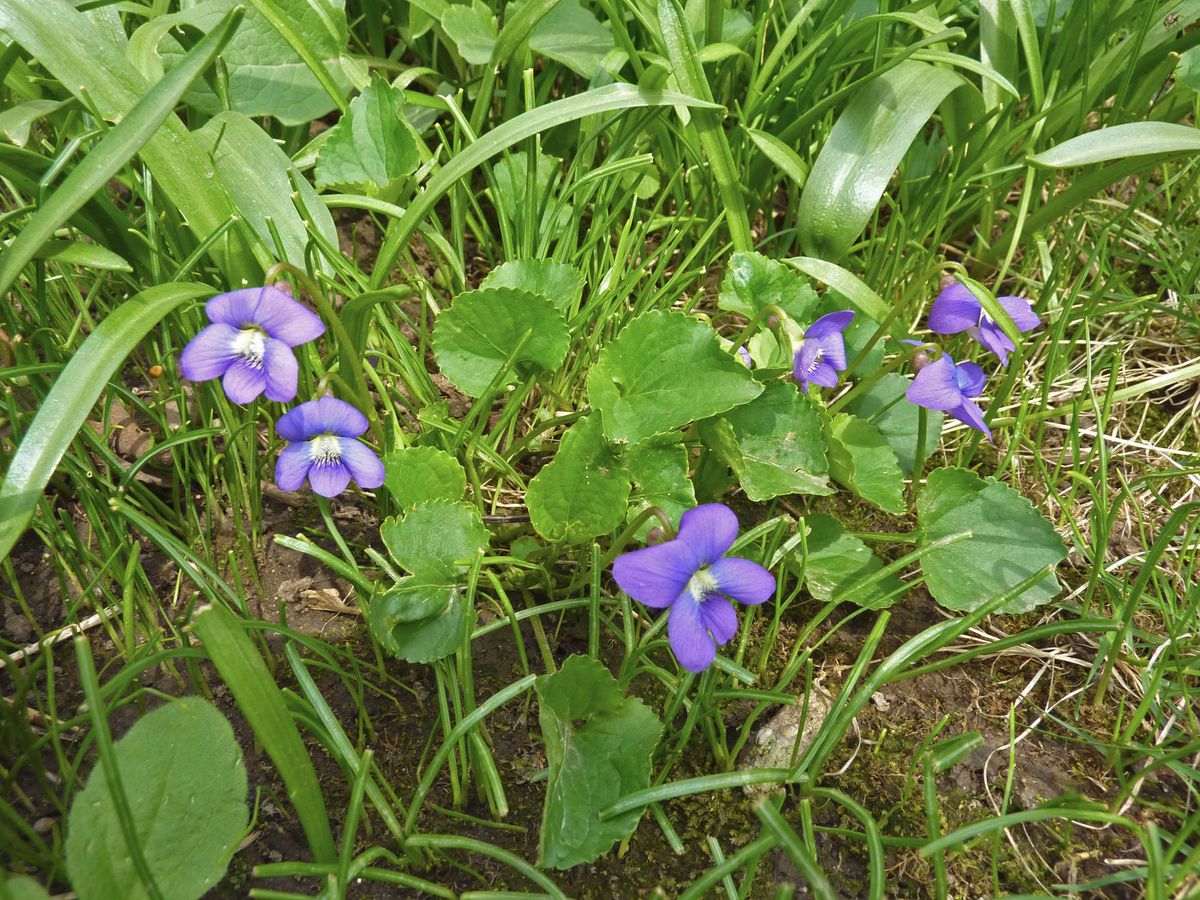
Distinguishing Features
- Deep blue-violet flowers (occasionally white with purple veins — the 'Confederate violet' form)
- Acaulescent — flowers and leaves arise separately on their own stalks directly from the rhizome ; no leafy stem
- Heart-shaped ( cordate ) basal leaves, broadly rounded, with crenate margins
- Leaves and petioles hairy ( pubescent ), especially when young
- Typical violet flower: 5 petals, bilateral symmetry, lower petal with white throat area and dark veins, bearded lateral petals
- Low-growing, compact rosette habit, 10–20 cm tall
Habitat
Lawns, meadows, woodland edges, floodplains, roadsides, and moist open to partly shaded areas. Very common and adaptable — thrives in both sun and partial shade.
Notes
The most common violet in eastern North American lawns and gardens — often considered a weed in turfgrass. State flower of Wisconsin, Rhode Island, Illinois, and New Jersey. Like other violets, produces cleistogamous (closed, self-pollinating) flowers near the ground in summer, generating abundant seed. All parts are edible — flowers are used to decorate cakes and salads, and leaves are rich in vitamins A and C. Highly variable in flower color.