Thuja occidentalis
Thuja from Greek thyia (a fragrant wood), possibly from thyein (to sacrifice, burn incense) — referring to the aromatic wood. occidentalis from Latin occidentalis (western), meaning 'of the west' from the European perspective, distinguishing it from Asian species.
Eastern White Cedar
Cupressaceae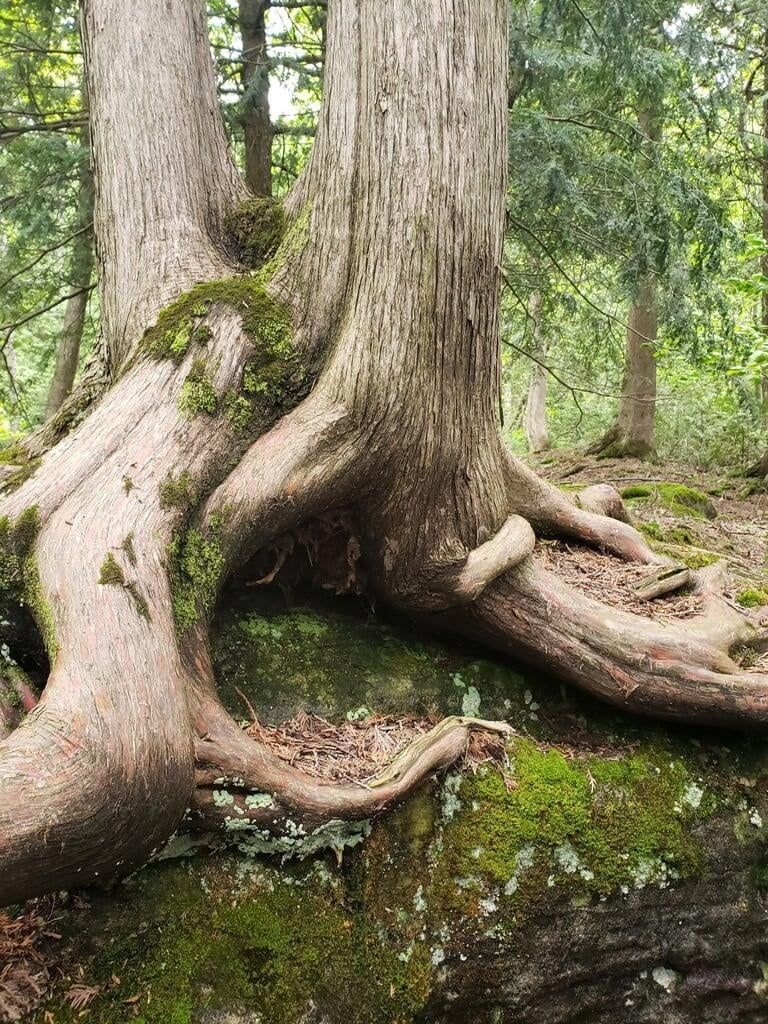
Distinguishing Features
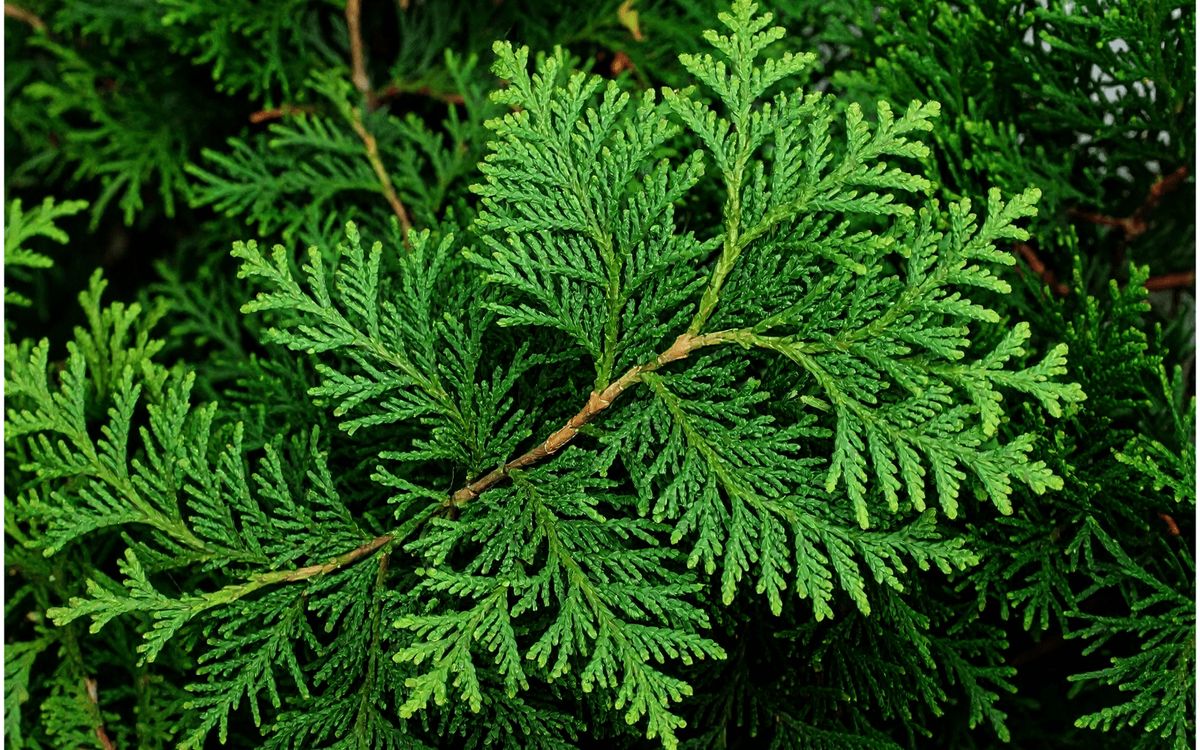
- Scale-like overlapping leaves flattened into fan-like sprays; bright green above, paler below with faint white stomatal markings
- Crushed foliage has a distinctive strong aromatic scent (thujaplicin compounds)
- Cones small (8–14 mm), oblong, brown, with 8–10 thin scales; cones persist on branchlets
- Bark fibrous, grey to reddish-brown, shredding in long vertical strips
- Trunk often buttressed at base; can be multi-stemmed in exposed sites
- Slow-growing, long-lived; some cliff-face specimens exceed 1,000 years old
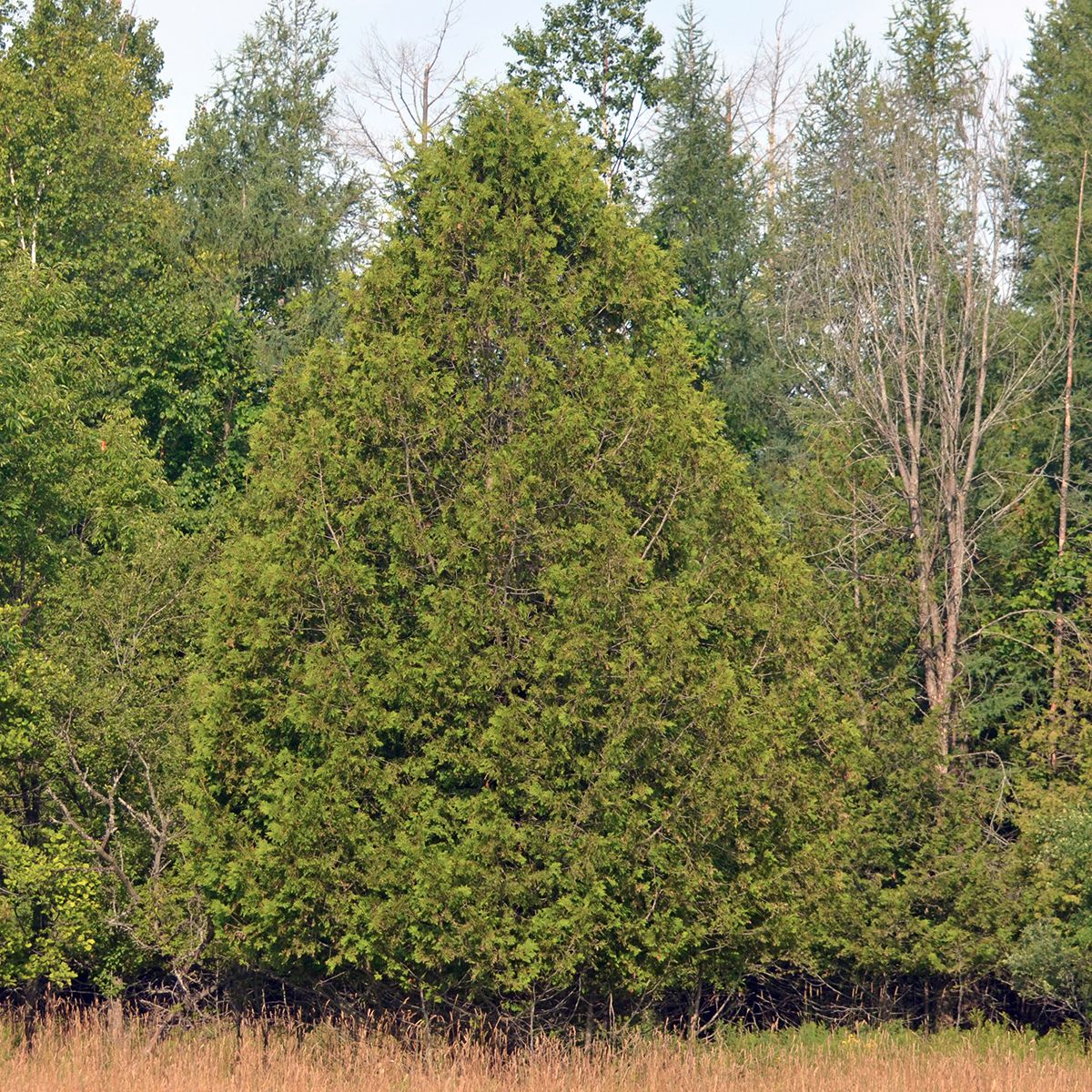
- Evergreen conifer, typically 10–20 m in open conditions, often shorter and shrubby on cliffs
Habitat
Highly variable: swamps, bogs, fens, and poorly drained lowlands (most common habitat in Ontario); also rocky limestone cliffs and alvars. Tolerates waterlogged and calcium-rich soils. Cold-hardy.
Notes
Called 'Arborvitae' (tree of life) in cultivation — Jacques Cartier's crew were saved from scurvy by Indigenous peoples using a tea from the foliage, rich in Vitamin C. Thuja wood is naturally rot-resistant. The oldest known trees in eastern North America (1,000+ years) cling to Niagara Escarpment cliff faces. Provides critical winter cover and food for deer, which heavily browse it. Widely used in hedging.