Syringa vulgaris
Syringa from Greek syrinx (tube, pipe), referring to the hollow or pith-filled stems that can be easily hollowed out — the same root as the pan pipes of Greek mythology. vulgaris from Latin vulgaris (common, widespread), indicating the plant's abundance.
Common Lilac
Oleaceae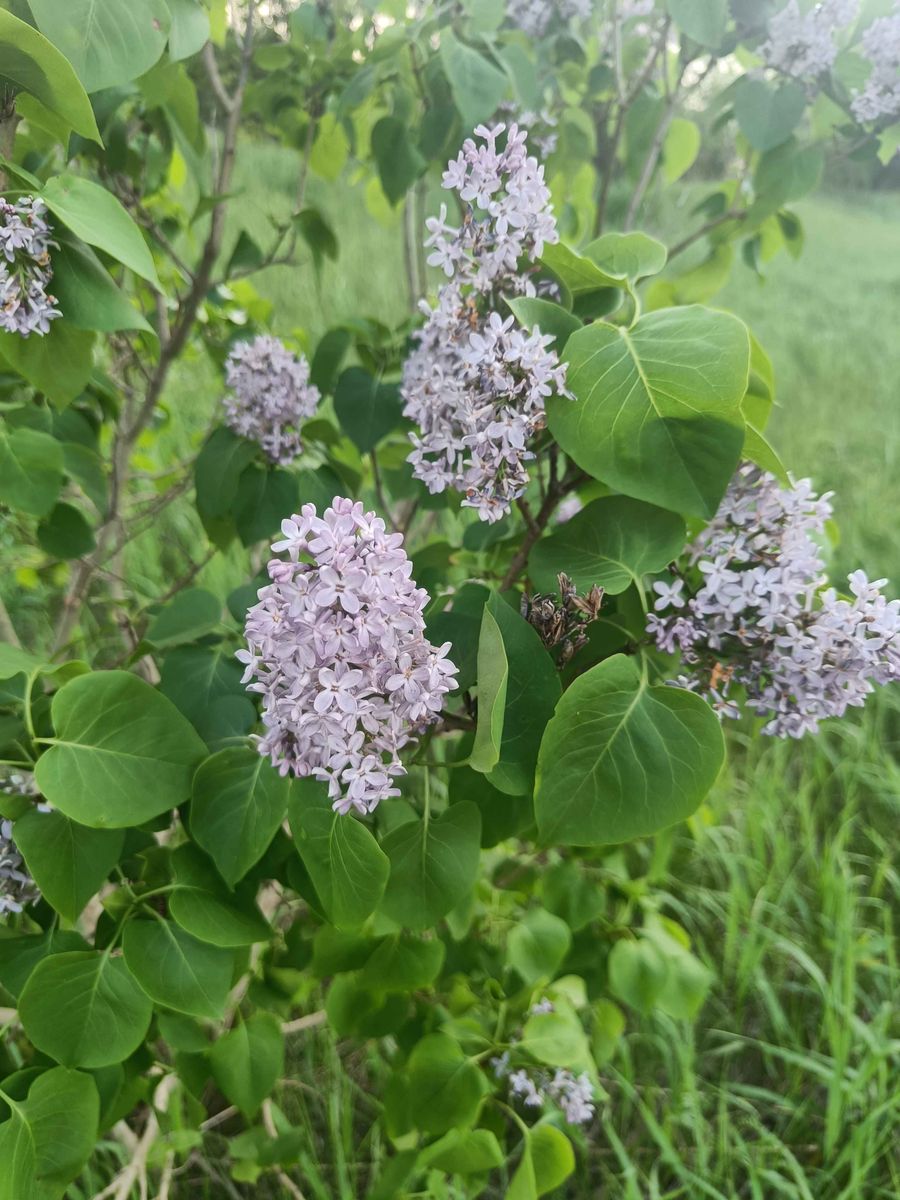
Distinguishing Features
- Upright, multi-stemmed, suckering deciduous shrub, typically 3–5 m tall, forming dense thickets over time via root suckers
- Leaves opposite , simple, broadly ovate to cordate , 4–12 cm long, dark green above, glaucous below; smooth margins ( entire )
- Flowers tubular with 4 spreading lobes , small (6–8 mm), intensely fragrant, borne in dense, terminal panicles 10–20 cm long; classic color is lilac-purple, but cultivars range from white to pink to deep magenta
- Fragrance sweet, heavy, and distinctive — one of the most recognizable floral scents; strongest in warm, still air
- Fruit a smooth, brown, leathery capsule (1–1.5 cm) splitting into two valves, each containing 2 winged seeds
- Bark grey-brown, becoming furrowed on old stems; young twigs green to grey, with prominent opposite buds
Habitat
Cultivated in gardens, parks, and hedgerows throughout temperate regions. Escapes to roadsides, old homesteads, abandoned farmland, and woodland edges, where it persists for decades. Prefers well-drained, neutral to alkaline soils in full sun.
Notes
One of the most beloved ornamental shrubs, cultivated for centuries for its intoxicating spring fragrance. Over 1,000 named cultivars have been developed, particularly by the French nursery Lemoine in the late 1800s. Lilacs can live for well over a century — abandoned homesteads are often marked by persistent lilac bushes long after the buildings have vanished. Spreads vigorously by root suckers and can become difficult to remove once established. The wood is extremely hard and dense. Member of Oleaceae (olive family), making it a relative of olives, ash trees, and jasmine.