Sambucus racemosa
Sambucus from Latin sambūcus (elder tree), possibly related to Greek sambukē (a stringed instrument), because the easily-hollowed pithy stems were used to make flutes and pipes. racemosa from Latin racemus (cluster of grapes), referring to the grape-like clusters of berries .
Red Elderberry
Caprifoliaceae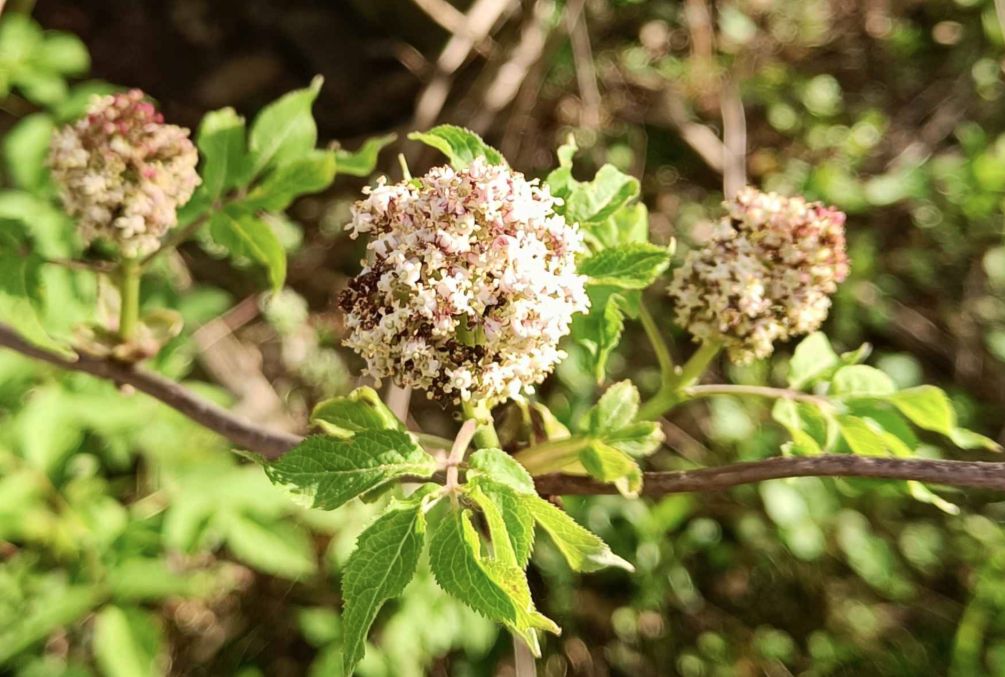
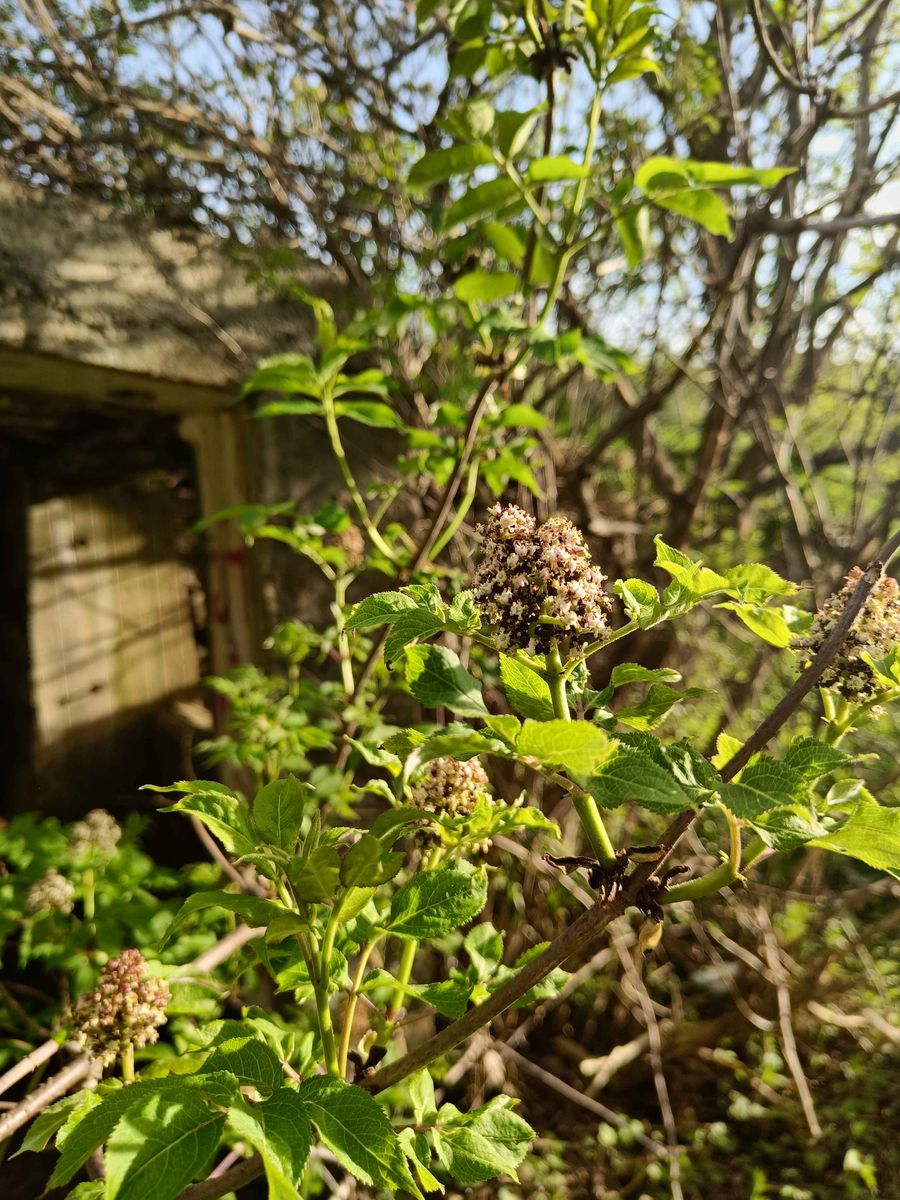
Distinguishing Features
- Bright red berries in dense dome-shaped or pyramidal clusters — distinct from the blue-black berries of S. canadensis/nigra
- Creamy-white flowers in a pyramidal panicle (not flat-topped like S. canadensis)
- Pinnately compound leaves with 5–7 sharply serrate , lance-shaped leaflets
- Stems with thick white pith (brown in older stems)
- Large multi-stemmed shrub or small tree, 2–6 m tall
- Flowers appear in spring (earlier than S. canadensis), often while leaves are still expanding
Habitat
Moist forests, forest edges, clearings, ravines, stream banks, and rocky slopes. Common in disturbed forest openings and along trails.
Notes
The red berries are mildly toxic when raw (contain cyanogenic glycosides), causing nausea if eaten in quantity, but are edible when cooked. Unlike the common elderberry (S. canadensis/nigra), red elderberry berries should not be eaten raw. Seeds are particularly toxic. The pithy stems have been used historically as spiles for tapping maple trees and as blowguns by children. Important wildlife food source — birds readily eat the berries .