Sagittaria subulata
Sagittaria from Latin sagitta (arrow), referring to the arrow-shaped emersed leaves characteristic of the genus. subulata from Latin subula (awl, a pointed tool), meaning 'awl-shaped,' describing the narrow, grass-like submersed leaves.
Dwarf Sagittaria
Alismataceae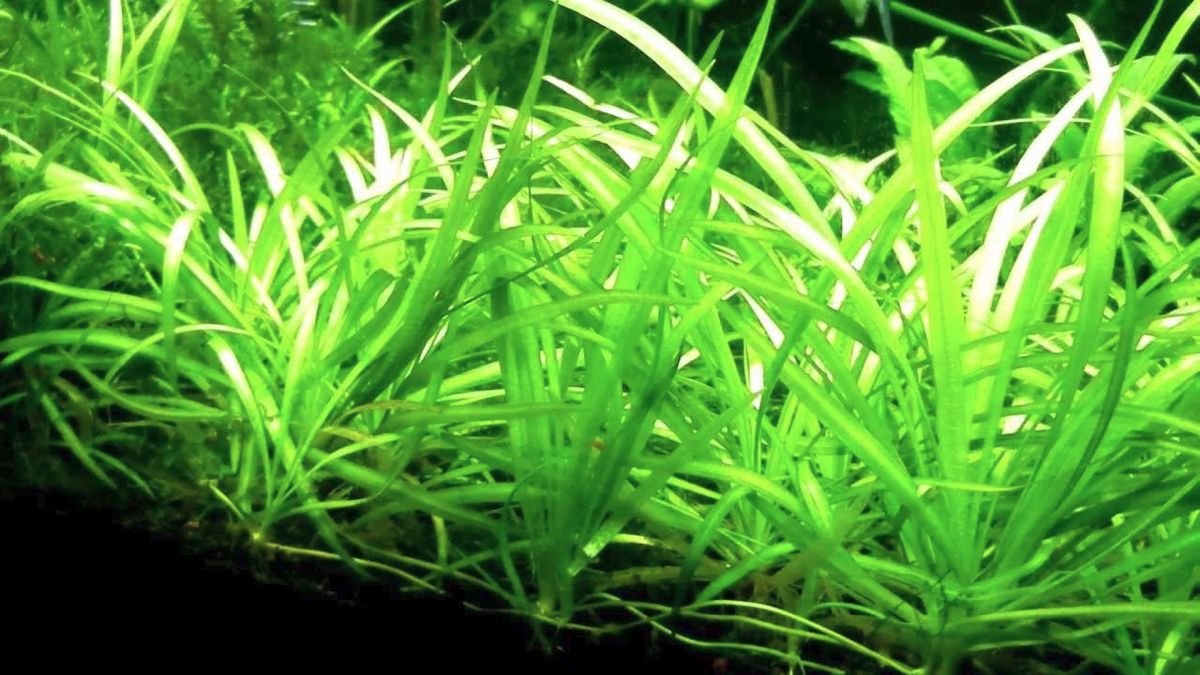
Distinguishing Features
- Narrow, grass-like, ribbon-shaped leaves (submersed form) — 5–30 cm long, 3–8 mm wide, forming a rosette
- Emersed leaves broader and may develop the arrow (sagittate) shape typical of the genus
- Spreads rapidly by runners (stolons), forming a dense grass-like carpet
- Leaves light to medium green, slightly curved, with a pointed tip
- Small white 3-petaled flowers on emergent stalks (occasionally produced in shallow aquaria)
- Chain-like runner production visible as new plantlets appear at increasing distances from the mother plant
Habitat
Shallow freshwater and brackish coastal marshes, tidal flats, pond margins, and slow streams. Tolerates slightly brackish conditions.
Notes
One of the most popular foreground/carpeting plants for aquaria. Resembles a lush underwater lawn when established. Extremely easy to grow — no CO2 required, tolerates low light, though grows more compactly in high light. Can become invasive in the aquarium, sending runners everywhere. Often confused with Vallisneria (which has rounded leaf tips and a different leaf texture). Tolerates a wide range of water hardness and even slight salinity.