Rubus idaeus
Rubus from Latin rubus (bramble, blackberry bush), possibly related to ruber (red). idaeus from Mount Ida in Crete or Turkey, where the plant was said to have been discovered by the gods.
Red Raspberry
Rosaceae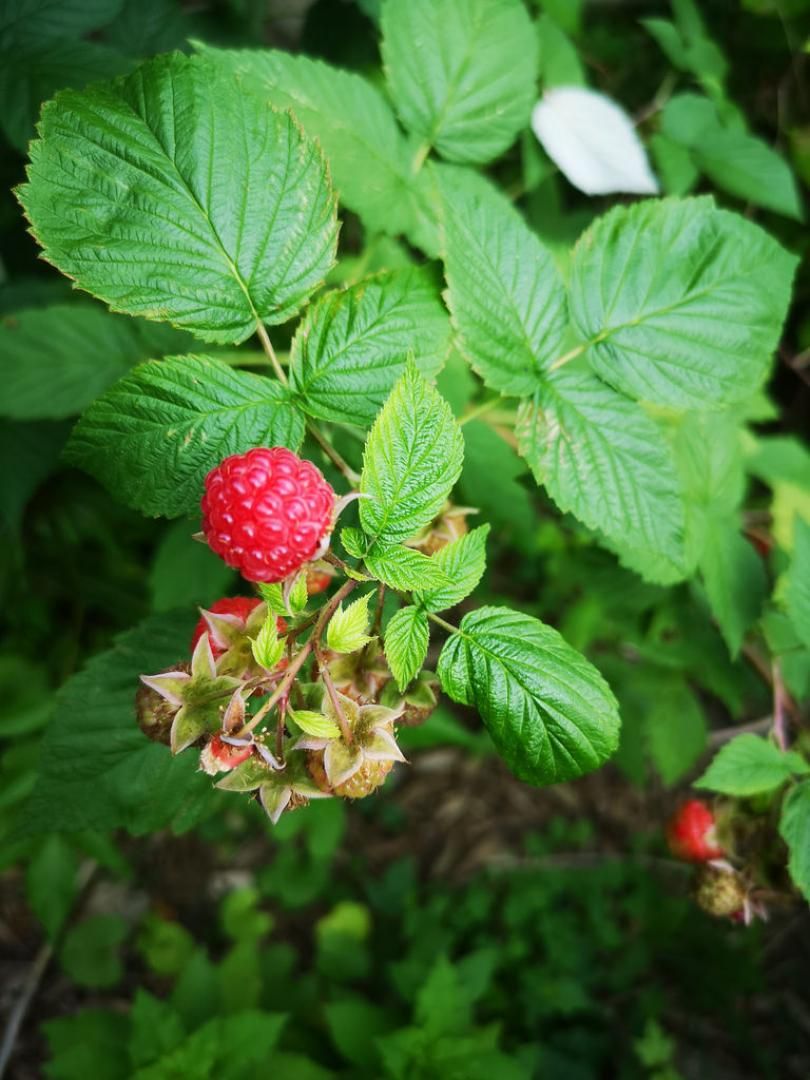
Distinguishing Features
- Compound leaves with 3–5 (usually 3 on floricanes, 5 on primocanes) sharply serrated leaflets, white-woolly beneath
- Stems (canes) armed with fine prickles — much slimmer than blackberry thorns
- White 5-petaled flowers in small clusters, petals shorter than sepals
- Aggregate fruit separates cleanly from the receptacle when ripe, leaving a hollow core — key difference from blackberries
- Biennial canes: primocanes (first year, vegetative) and floricanes (second year, fruit-bearing)
- New canes green to reddish, often with a whitish waxy bloom
Habitat
Forest edges, clearings, roadsides, disturbed areas, and thickets. Thrives in partial shade to full sun on well-drained soils.
Notes
Fruit is rich in vitamin C and antioxidants. Leaf tea has a long history in folk medicine, particularly for pregnancy support. Spreads aggressively by root suckers and can form dense thickets. Flowers are important for pollinators.
Tags
Life Form
Phenology
Ethnobotany
Ecology