Rhus typhina
Rhus from the Greek rhous, an ancient name for sumac. typhina from the resemblance of the densely hairy twigs to the velvet on a stag's antlers (in velvet stage), recalling Typha (cattail) in its fuzzy texture.
Staghorn Sumac
Anacardiaceae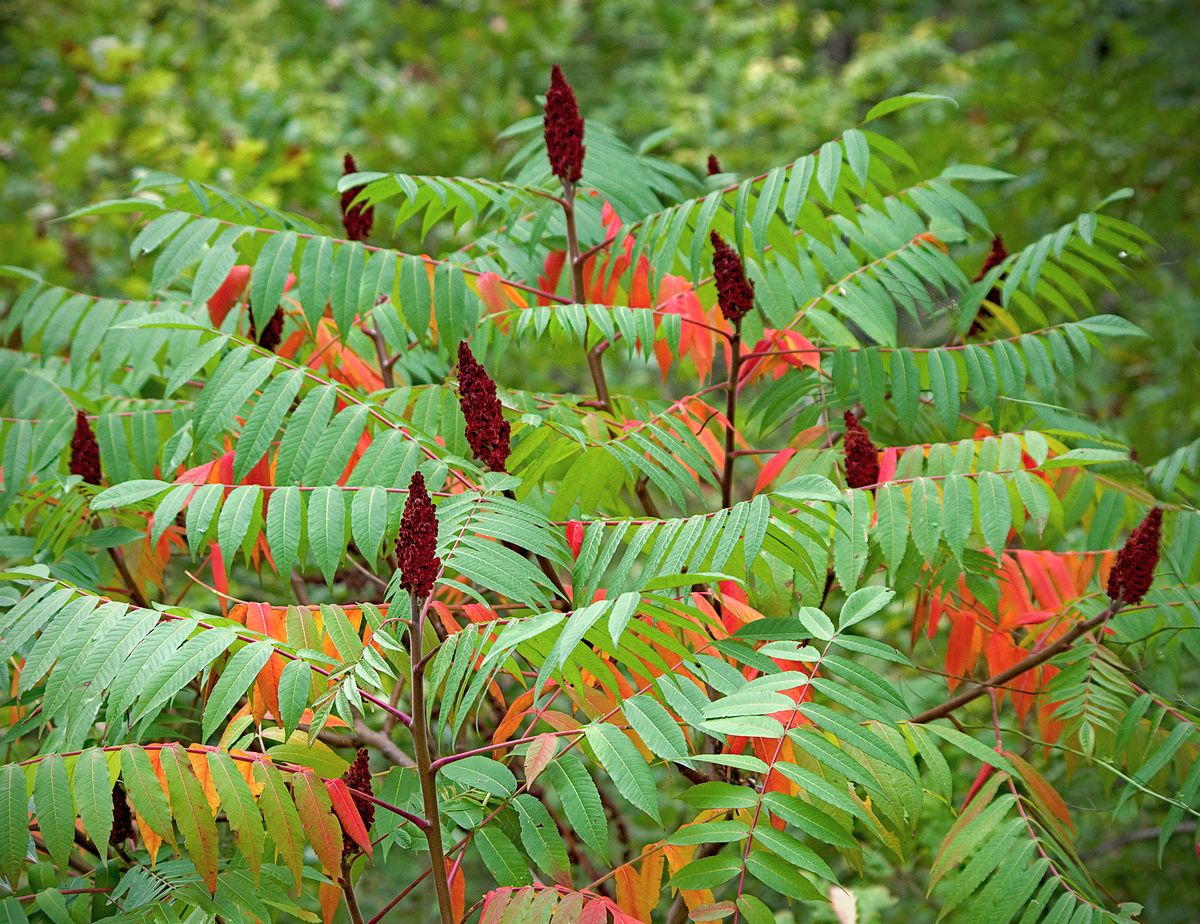
Distinguishing Features
- Large pinnately compound leaves with 11–31 sharply serrated leaflets, 40–60 cm long
- Dense, velvety hairs covering young twigs and leaf stalks — resembling deer antler velvet
- Upright, dense, cone-shaped clusters ( panicles ) of dark red fuzzy drupes , persisting through winter
- Brilliant scarlet, orange, and crimson fall colour
- Milky sap exuding from broken twigs and leaf stalks
- Small tree or large shrub, 3–10 m, often forming clonal thickets via root suckers
Habitat
Dry, open areas: roadsides, field edges, rocky outcrops, old pastures, railway embankments, and forest edges. Tolerates poor, dry soils. Full sun.
Notes
The fuzzy red drupes can be steeped in cold water, strained, and sweetened to make sumac lemonade or rhus juice. Not to be confused with poison sumac (Toxicodendron vernix), which has smooth stems, entire leaflet margins, and white berries growing in wetlands. One of the most spectacular native trees for fall colour.
Tags
Biogeography
Life Form
Phenology
Ethnobotany
Ecology