Pyrus calleryana
Pyrus from Latin pyrus (pear tree), ultimately from Greek apios. calleryana honoring Joseph-Marie Callery (1810–1862), French missionary and naturalist who collected the species in China and sent seeds to Europe.
Callery Pear
Rosaceae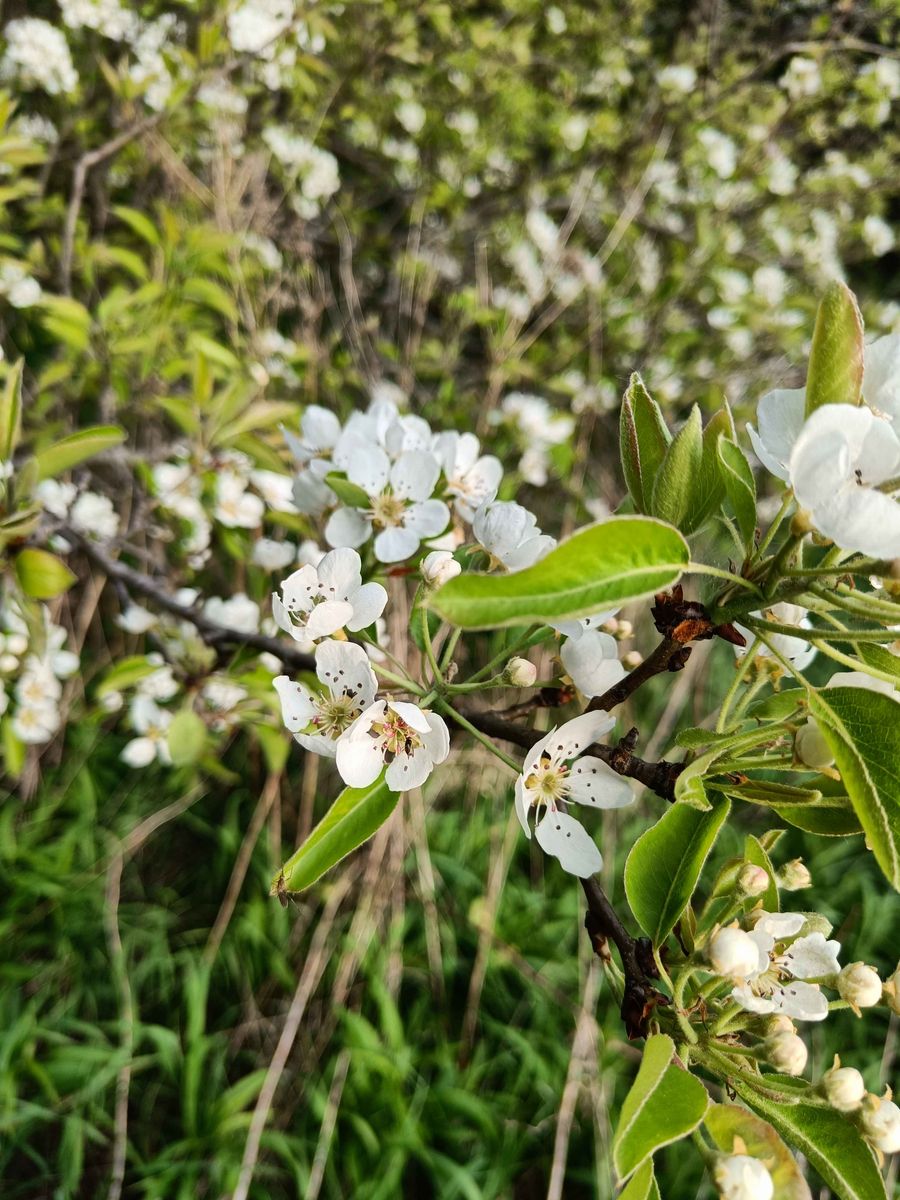
Distinguishing Features
- Profuse clusters of white 5-petaled flowers in early spring before or with emerging leaves — distinctive display
- Glossy dark green, broadly ovate leaves with scalloped ( crenate ) margins, turning red to deep purple in autumn
- Small hard round fruits (pomes) less than 1.5 cm diameter, brown and inedible
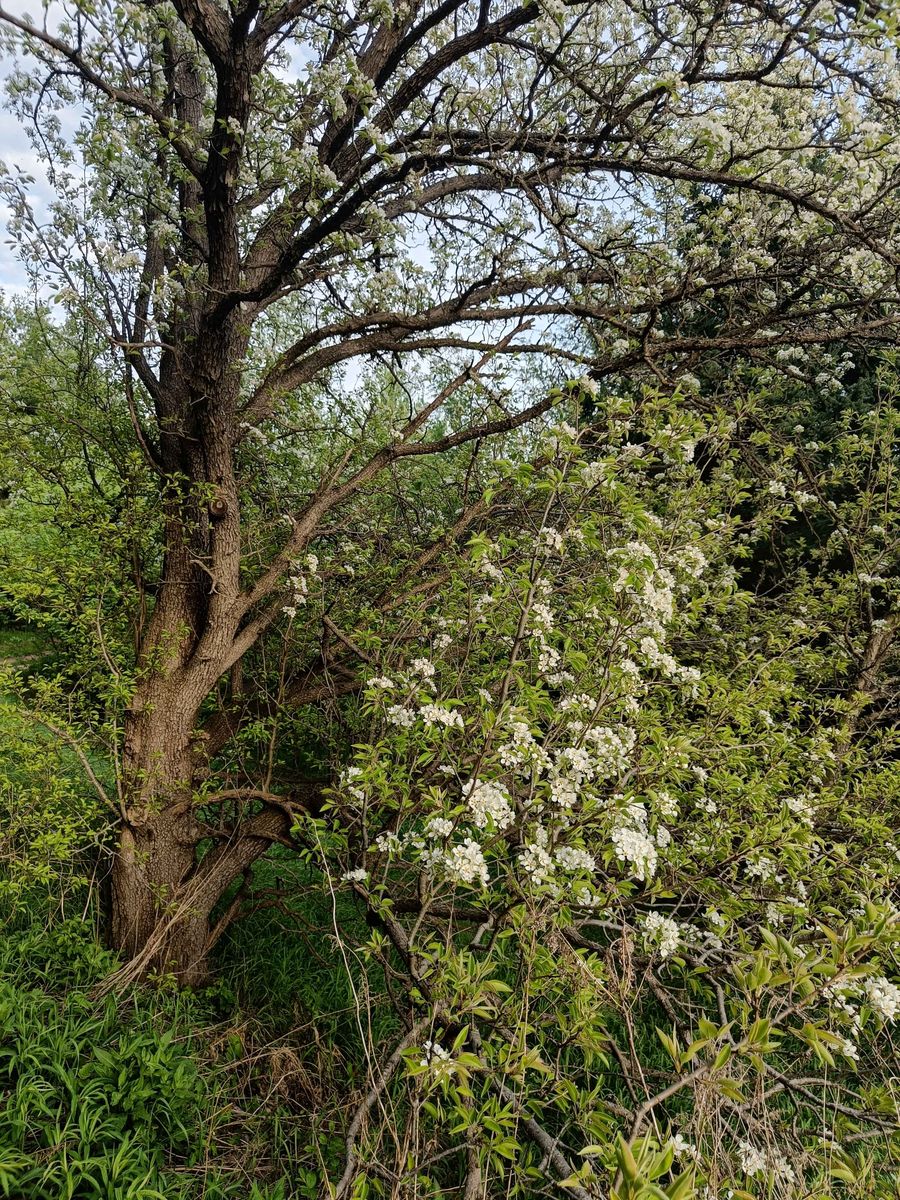
- Tight pyramidal to columnar crown shape when young, becoming broader and irregular with age
- Thorny in wild or naturalized forms (cultivars are often thornless or less thorny)
- Smooth gray bark developing fissures with age; flowers have a noticeable unpleasant odor
Habitat
Widely planted as an ornamental street and landscape tree. Naturalized in disturbed sites, roadsides, old fields, forest edges, and fencerows. Highly invasive in eastern North America.
Notes
Originally introduced to North America in the 1960s as the cultivar 'Bradford' for its ornamental spring bloom, fall color, and fast growth. Now recognized as highly invasive — cross-pollination between different cultivars produces thorny, vigorous seedlings that aggressively colonize disturbed land. Many US states have banned its sale. The 'Bradford' cultivar is also structurally weak, prone to splitting in storms due to its tight branch angles.