Ptelea trifoliata
Ptelea from the Greek ptelea, the ancient name for elm (Ulmus), applied because of the similar wafer-like winged fruit. trifoliata from Latin tri (three) + foliatus (leaved), for the characteristic three-parted leaves.
Common Hoptree
Rutaceae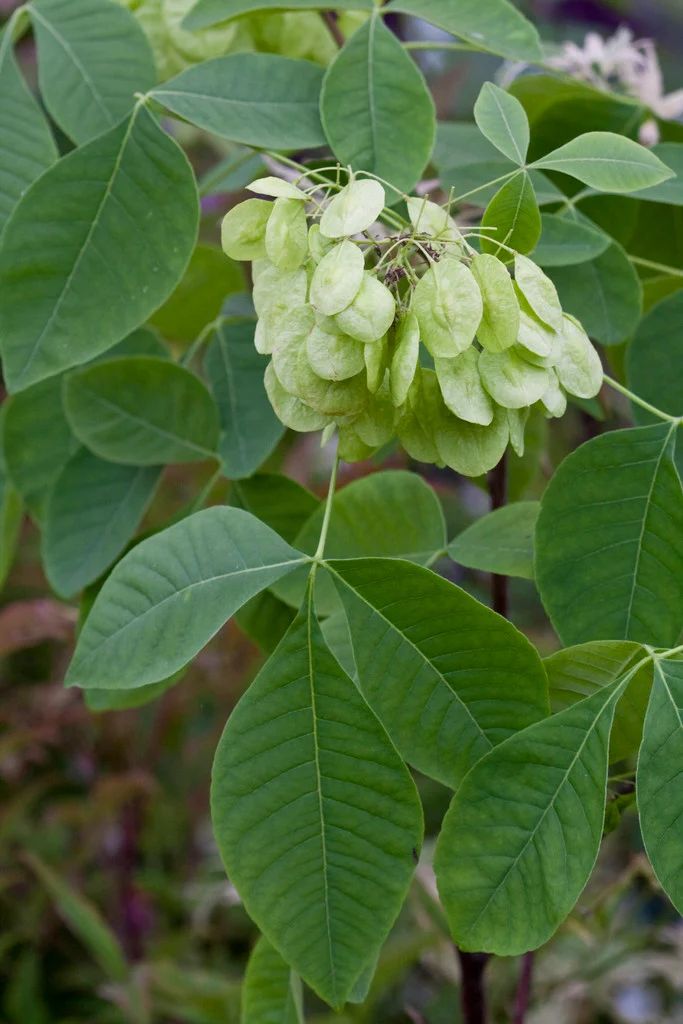
Distinguishing Features
- Trifoliate leaves — three sessile or short-stalked leaflets with entire or finely crenulate margins
- Circular, wafer-like winged fruit (samara), 2–2.5 cm diameter, with a wide papery wing surrounding a central seed — resembling an elm key
- Aromatic when crushed — leaves, bark, and fruit have a strong, somewhat unpleasant citrus-like odour (citrus family)
- Small, greenish-white, fragrant flowers in dense terminal cymes
- Small tree or large shrub, 3–8 m, often with a rounded crown
- Bark smooth, dark gray-brown; gland-dotted like other Rutaceae
Habitat
Rocky woodlands, bluffs, limestone outcrops, woodland edges, ravines, and dry slopes. Partial shade to full sun. Prefers well-drained, rocky or sandy soils.
Notes
Also called wafer ash or stinking ash (for the pungent crushed foliage). Fruit was historically used as a hops substitute in brewing. A host plant for the giant swallowtail butterfly (Papilio cresphontes), whose caterpillars feed on various members of the citrus family (Rutaceae). An often-overlooked native small tree with ornamental wafer-like fruits.
Tags
Biogeography
Life Form
Phenology
Ecology