Najas guadalupensis
Najas from Greek Naias (water nymph), a naiad — referring to its fully aquatic lifestyle. guadalupensis meaning 'of Guadalupe,' referring to the Guadalupe River region or Guadalupe Island where the type specimen was collected.
Guppy Grass
Hydrocharitaceae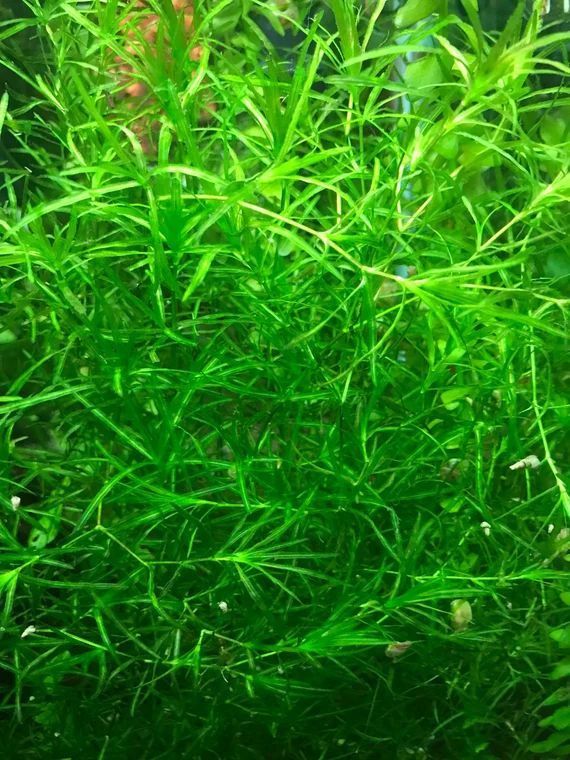
Distinguishing Features
- Thin, delicate, branching stems covered with dense whorls of narrow linear leaves
- Leaves very fine, 1–3 cm long, less than 1 mm wide, with minute serrations visible under magnification
- Entirely submersed — never produces emersed growth; rootless or weakly rooted
- Forms dense tangled floating or rooted masses of bright green foliage
- Extremely brittle stems — fragments easily, each fragment capable of growing into a new plant
- Tiny inconspicuous flowers in leaf axils (aquatic pollination)
Habitat
Freshwater ponds, lakes, ditches, slow rivers, and streams. Fully submersed aquatic. Tolerates still to slow-flowing water in tropical to warm-temperate climates.
Notes
Named 'guppy grass' in the aquarium hobby because its dense tangles provide ideal cover for livebearer fry (guppies, mollies, endlers). One of the fastest-growing aquarium plants — can double its mass in days under good conditions. Requires no planting (can float freely), no CO2, minimal light, and no fertilization. Excellent biological filter, absorbing ammonia and nitrates rapidly. Its brittle nature means it constantly fragments and spreads. Also known as Southern Naiad or Southern Water-nymph.