Moringa oleifera
Moringa from the Tamil murungai or Malayalam muringa, the local name for the tree. oleifera from Latin oleum (oil) + ferre (to bear), meaning oil-bearing, referring to the high-quality oil pressed from the seeds (ben oil).
Moringa
Moringaceae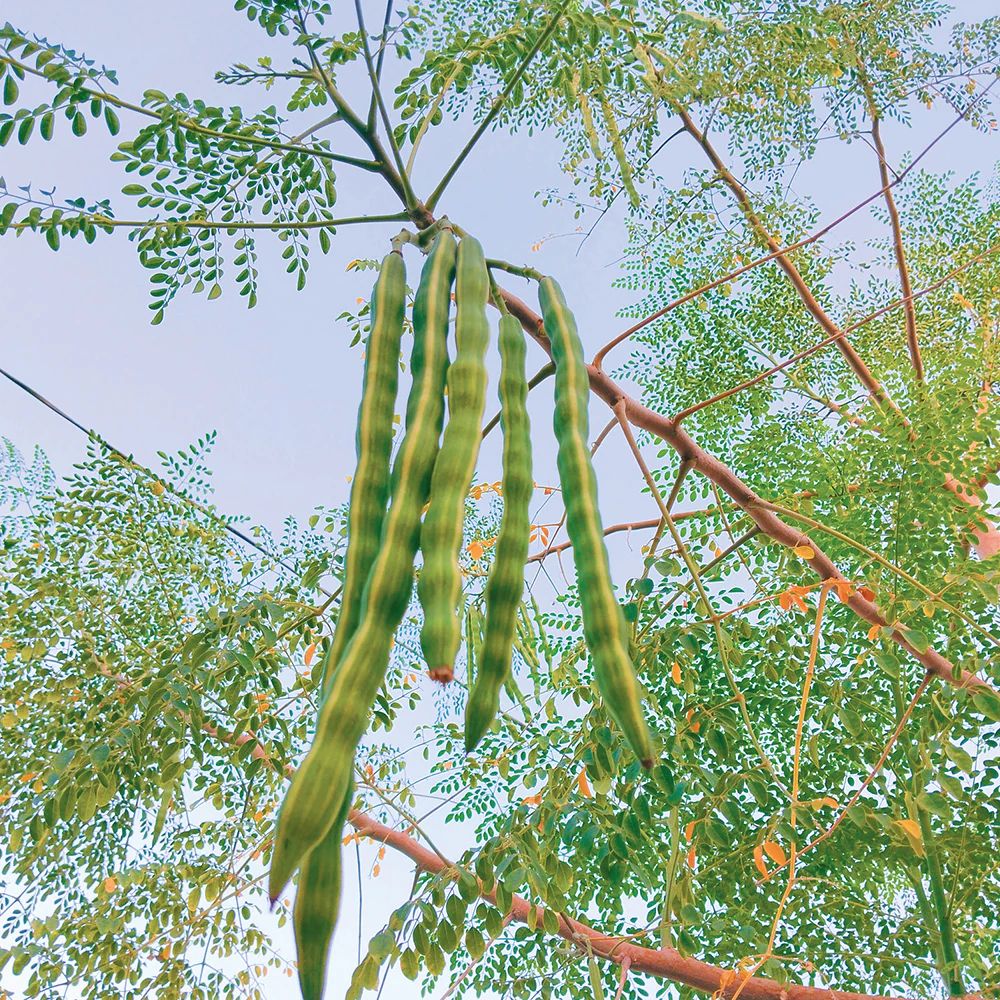
Distinguishing Features
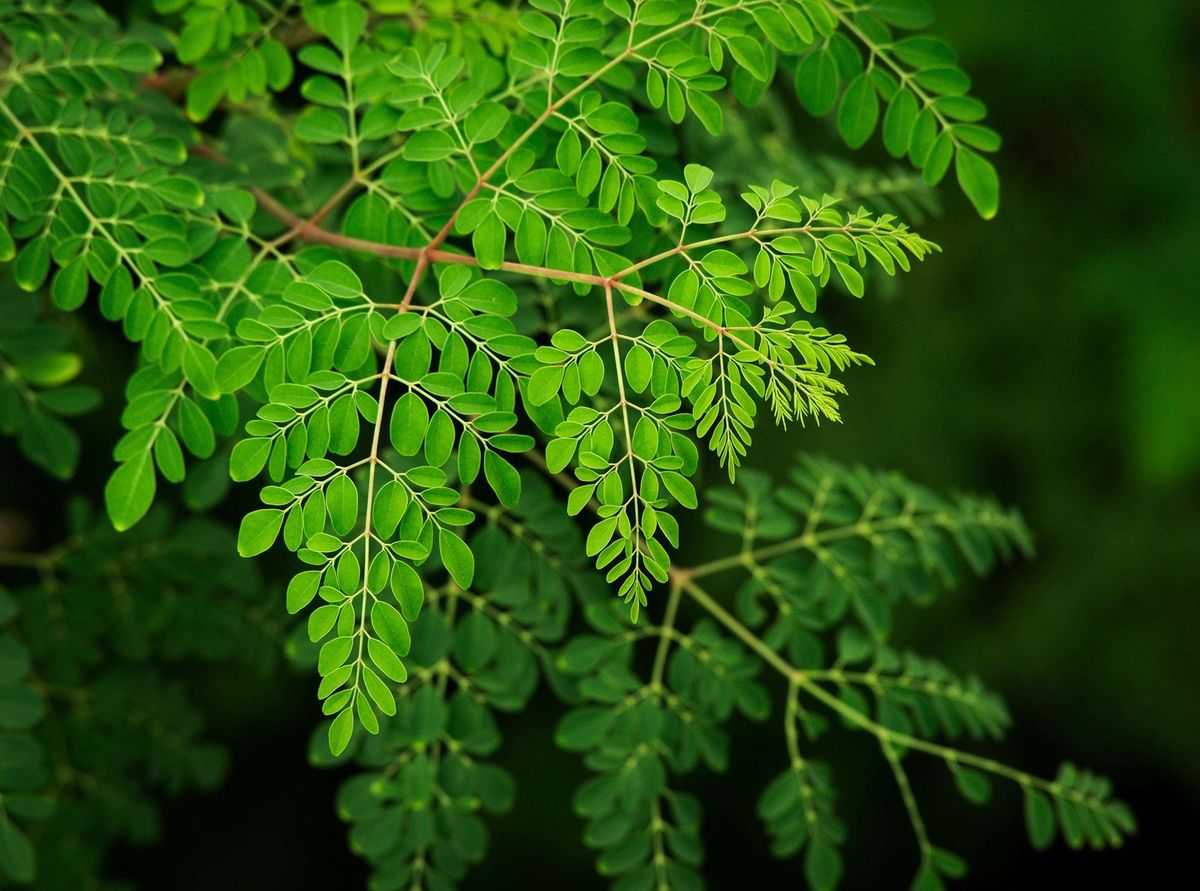
- Bi- to tripinnately compound, feathery leaves with many small, oval leaflets — gives a delicate, airy appearance
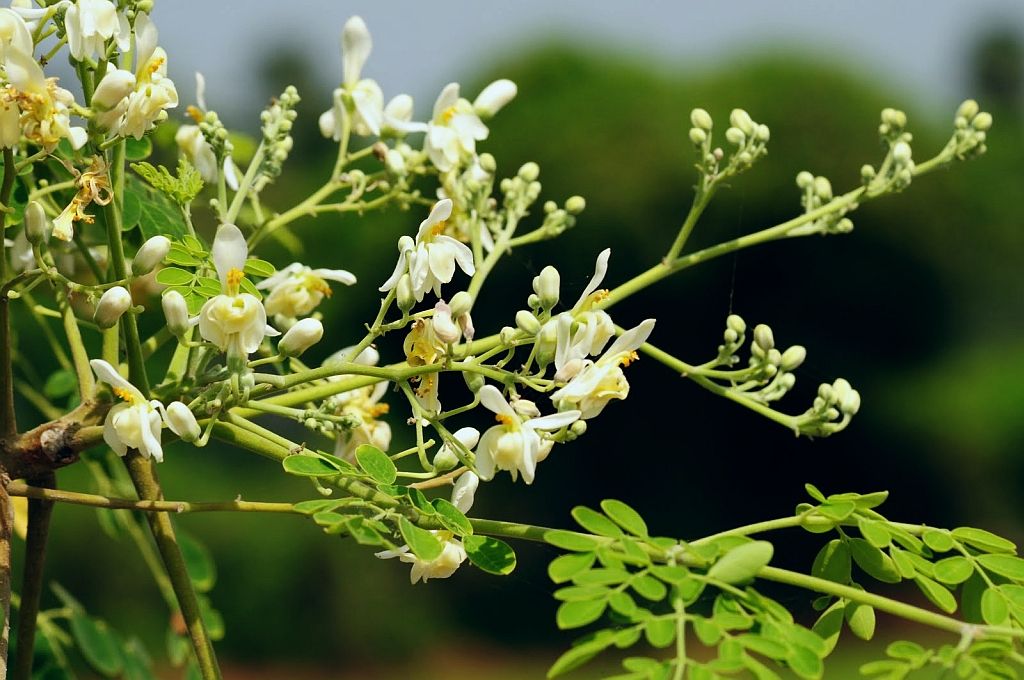
- White to cream-coloured, fragrant flowers with 5 unequal petals in axillary panicles
- Long, slender, three-sided pod-like capsules (20–45 cm), called drumsticks, hanging in clusters
- Soft, corky bark on a slender trunk; swollen, tuberous base for water storage
- Extremely fast-growing — can reach 4–5 m in the first year under good conditions
- Deciduous in dry season, quickly producing new leaves with rainfall
Habitat
Tropical and subtropical dry to moist conditions. Tolerates drought, poor soils, and marginal land. Requires frost-free conditions. Full sun.
Notes
Called the miracle tree due to its exceptional nutritional content — leaves are rich in protein, vitamins A and C, calcium, iron, and potassium. Every part is used: leaves (salads, powder), flowers (tea), immature pods (cooked vegetable), seeds (water purification, ben oil), root (condiment). Seeds contain proteins that can flocculate and purify turbid water. Cannot tolerate frost.