Menispermum canadense
Menispermum from Greek mene (moon) + sperma (seed), describing the distinctive crescent- or moon-shaped seed. canadense meaning of Canada, where the species was early collected.
Common Moonseed
Menispermaceae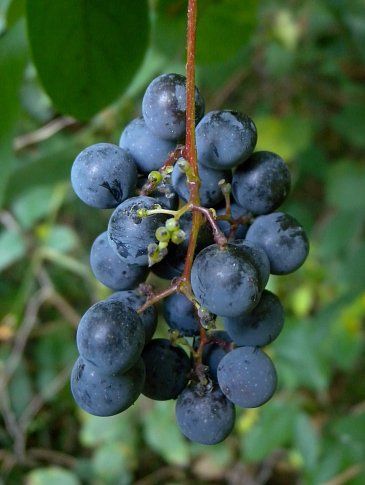
Distinguishing Features
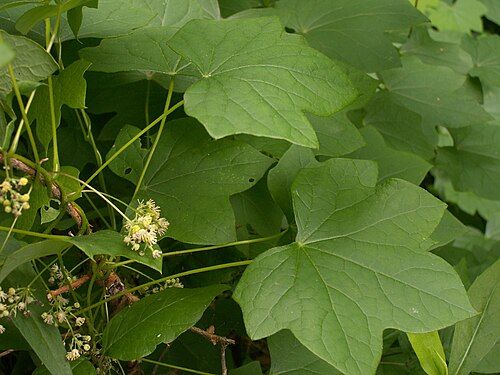
- Leaves broadly shield-shaped (peltate to subpeltate) with smooth, unlobed or shallowly 3–7 lobed margins — NO TEETH (key difference from grape)
- Twining vine climbing by stem coiling — NO TENDRILS (grapes have tendrils)
- Clusters of blue-black berries closely resembling wild grapes
- Each fruit contains a single crescent- or horseshoe-shaped seed — grapes have multiple round seeds
- Leaf stalk attaches slightly behind the leaf margin (peltate or nearly so)
- Stems slender, woody, smooth, without the shredding bark of grapevines
Habitat
Rich, moist deciduous woods, stream banks, thickets, fencerows, and woodland edges. Partial shade to shade. Prefers moist, rich soils.
Notes
ALL PARTS ARE TOXIC — contains the alkaloid dauricine, which can be fatal. Berries are a dangerous grape lookalike. Critical differences from wild grape: (1) no tendrils, (2) smooth-edged leaves vs. toothed, (3) single crescent-shaped seed vs. multiple round seeds, (4) leaf stalk attaches near centre of leaf base rather than at margin. Responsible for poisoning deaths when confused with wild grapes.
Tags
Biogeography
Life Form
Phenology
Ethnobotany