Maianthemum stellatum
Maianthemum from Greek Maios (May) + anthemon (flower), meaning 'May flower.' stellatum from Latin stellatus (starred, star-shaped), referring to the star-shaped white flowers.
Star-flowered False Solomon's Seal
Asparagaceae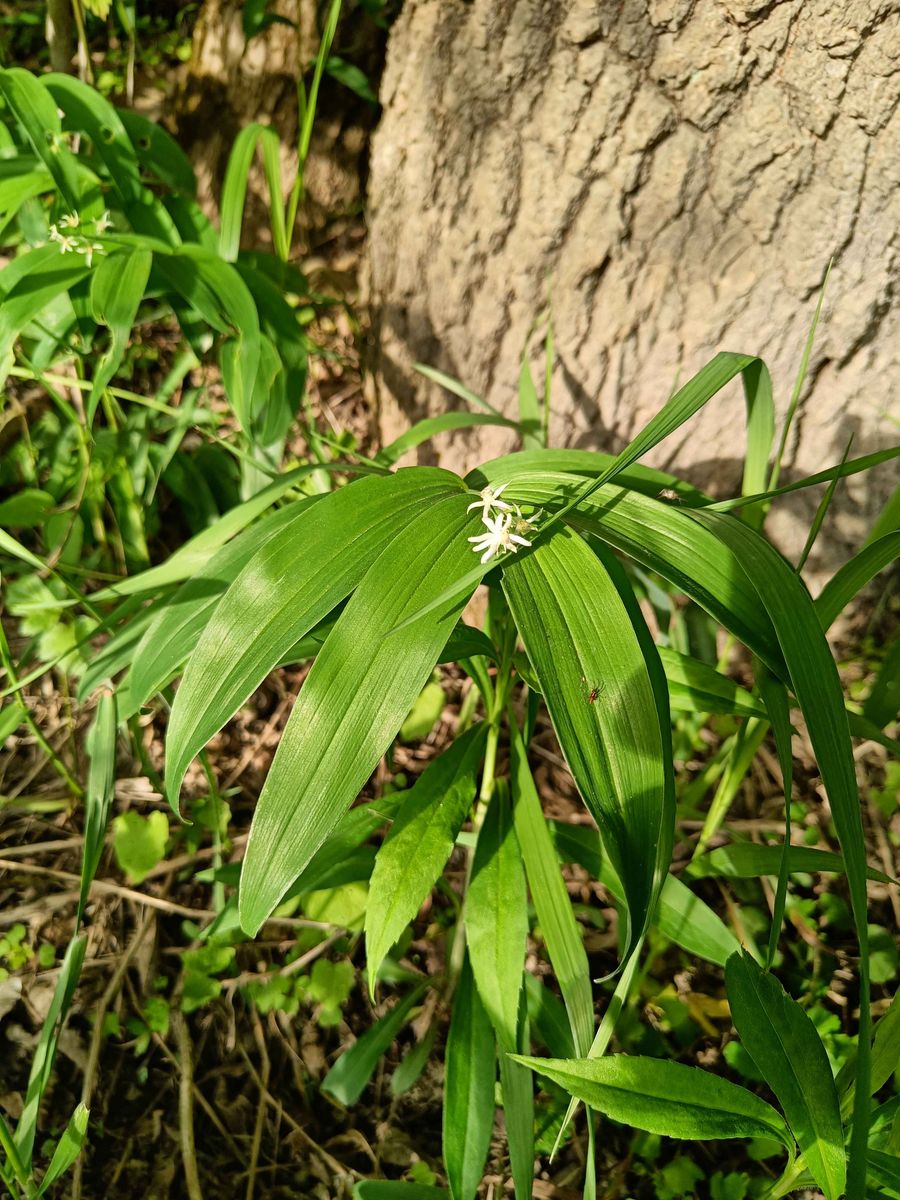
Distinguishing Features
- Small white star-shaped flowers in a simple, unbranched terminal raceme (6–20 flowers) — unlike the large feathery plume of M. racemosum
- Leaves narrower and more lance-shaped than M. racemosum, folded or keeled along the midrib, clasping the stem
- Berries ripen from green with dark stripes to dark blue-black or nearly black — distinct from the red berries of M. racemosum
- Shorter and more delicate plant (20–60 cm) with a zigzag stem
- Rhizomatous ; often forms dense colonial patches
- Parallel-veined leaves arranged alternately along an arching unbranched stem
Habitat
Moist to mesic woodlands, streambanks, lakeshores, meadow edges, and moist prairies. Tolerates more open and drier conditions than M. racemosum.
Notes
Often confused with Maianthemum racemosum (false Solomon's seal), but distinguished by fewer, larger star-shaped flowers in a simple raceme rather than a plume-like panicle , and by dark blue-black berries rather than red ones. Also smaller and more slender overall. Young shoots were eaten by Indigenous peoples. The rhizomes spread to form extensive clonal colonies.
Tags
Biogeography
Life Form
Phenology
Habitat
Vegetative Strategy
Morphology