Ludwigia palustris
Ludwigia honoring Christian Gottlieb Ludwig (1709–1773), German botanist and professor at the University of Leipzig. palustris from Latin paluster (of marshes, swampy), referring to its wetland habitat.
Marsh Seedbox
Onagraceae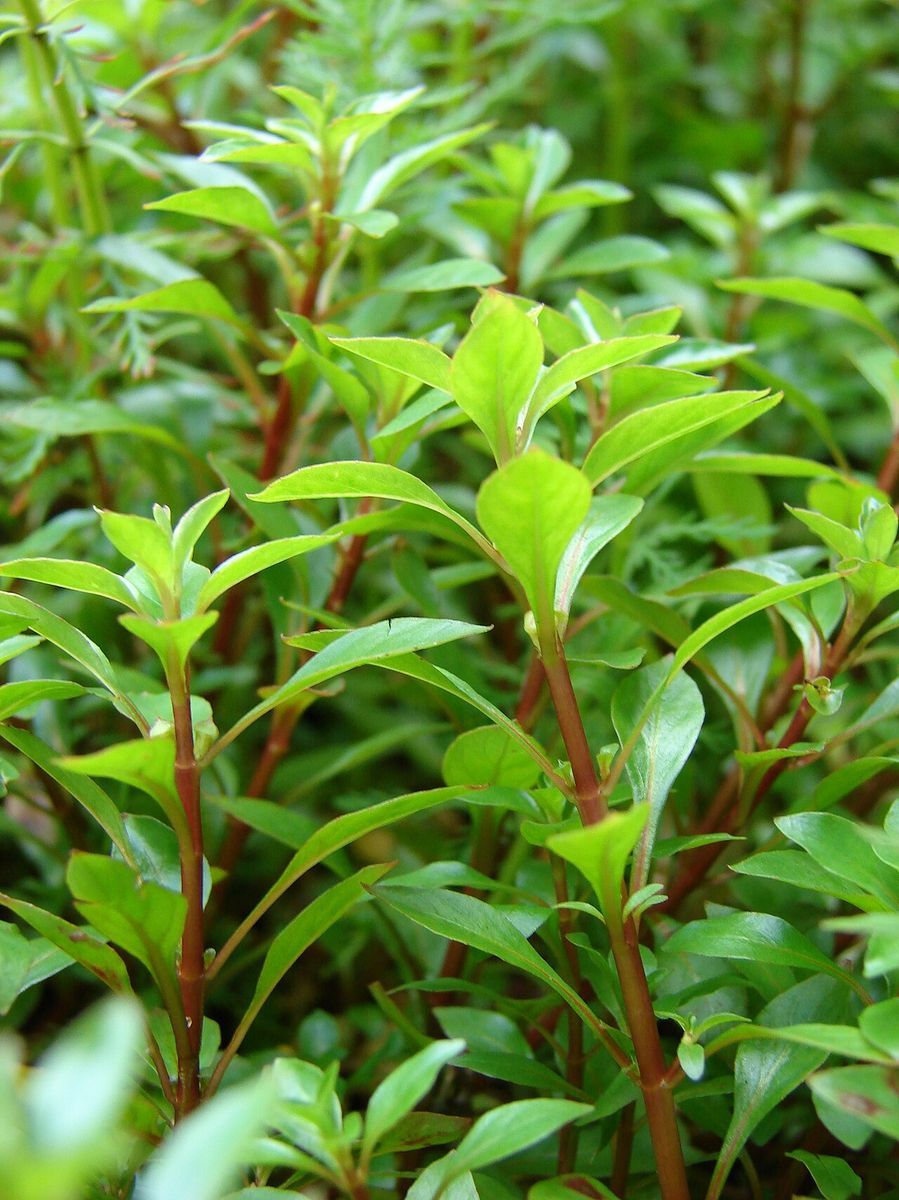
Distinguishing Features
- Opposite , ovate to elliptic leaves, 1–3 cm long, green above and often reddish-purple beneath (entirely red under high light)
- Stems creeping to ascending, round, smooth, often reddish
- Flowers tiny (2–3 mm), green, petal-less, solitary in leaf axils — easily overlooked
- Fruit a small 4-sided capsule (the 'seedbox')
- Grows as a creeping mat when emersed, more upright when submersed
- Under high light, the entire plant turns deep red to burgundy — highly ornamental
Habitat
Marshes, pond margins, ditches, stream edges, vernal pools, and mudflats. Grows submersed, emersed, or creeping over wet mud. Tolerant of temporary flooding and drawdown.
Notes
One of the few Ludwigia species native to both the Old and New World. An excellent low-tech aquarium plant that develops intense red coloration under strong light without requiring CO2 injection — unusual for a red plant. Also known as Water Purslane. Can be grown as an emergent marginal plant in ponds. The submersed form looks quite different from the emersed creeping form, which can cause identification confusion.