Juniperus virginiana
Juniperus from Latin juniperus (juniper), possibly from Latin junio (young) + parere (to produce), referring to the continuous production of young berries alongside mature ones. virginiana meaning of Virginia.
Eastern Red Cedar
Cupressaceae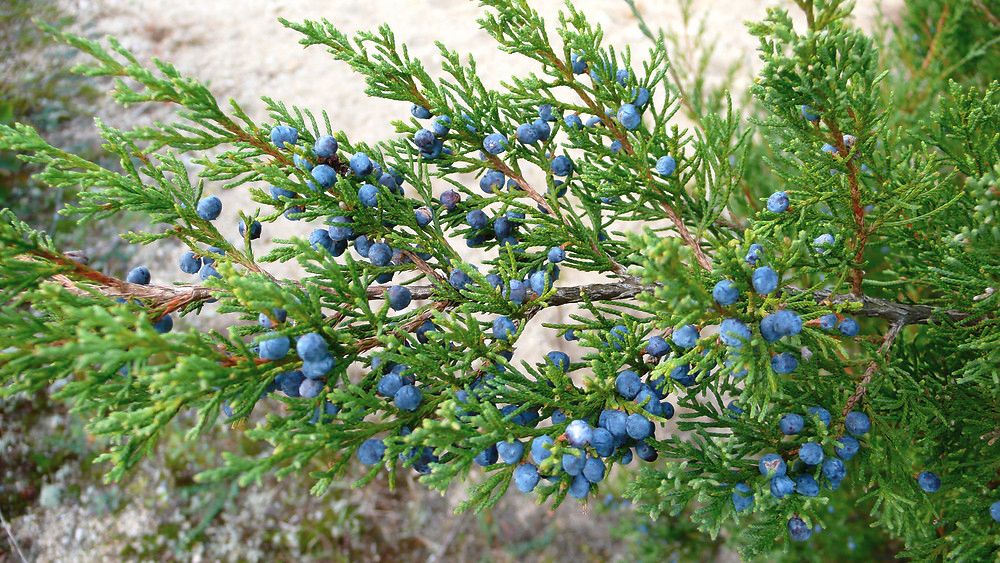
Distinguishing Features
- Scale-like, tightly appressed mature foliage (dark green); awl-shaped, prickly juvenile foliage often present on the same tree
- Blue-gray to dark blue berry -like seed cones (female), waxy-coated, 5–7 mm diameter — technically modified cones, not true berries
- Reddish-brown fibrous bark that peels off in long, shreddy strips
- Dense, pyramidal to columnar form when young, becoming more irregular with age
- Aromatic, rot-resistant reddish heartwood with pale sapwood
- Dioecious — separate male ( pollen ) and female ( berry ) trees
Habitat
Old fields, fence rows, rocky outcrops, dry ridges, limestone glades, and pastures. Pioneer species on abandoned agricultural land. Tolerates drought and poor soils. Full sun.
Notes
Not a true cedar (Cedrus) but a juniper. Wood is used for cedar chests, pencils, and fence posts due to its rot resistance and aromatic oils. An alternate host for cedar-apple rust (Gymnosporangium juniperi-virginianae), which damages apple crops. Berries are an important winter food for cedar waxwings and other birds.
Tags
Biogeography
Life Form
Phenology
Ecology