Juglans cinerea
Juglans from Latin Jovis glans (Jupiter's nut or Jupiter's acorn), the Roman name for the walnut. cinerea from Latin cinereus (ash-coloured), describing the pale gray bark.
Butternut
Juglandaceae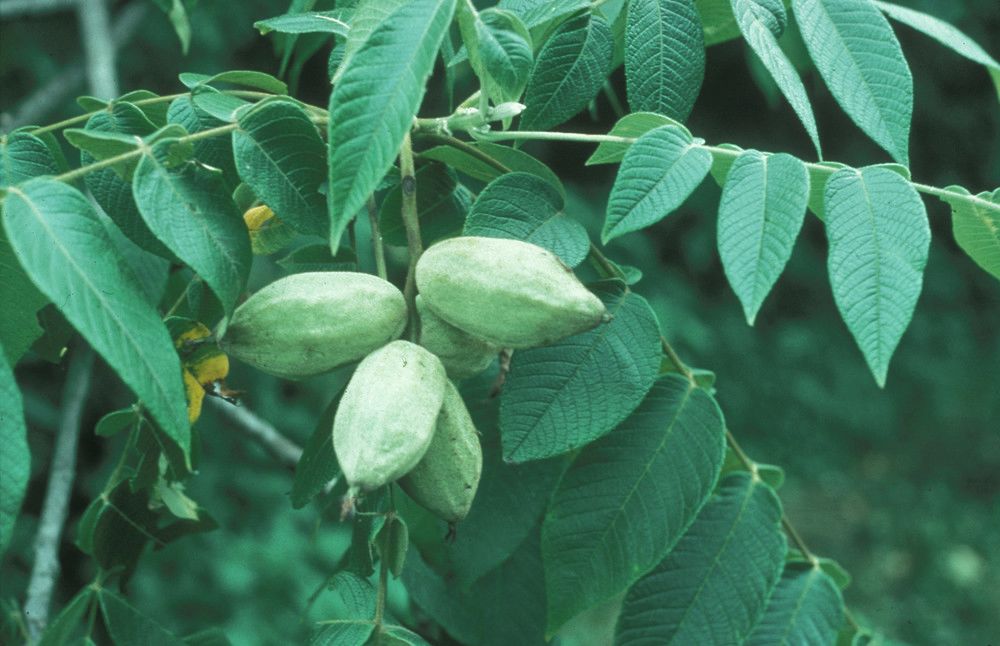
Distinguishing Features
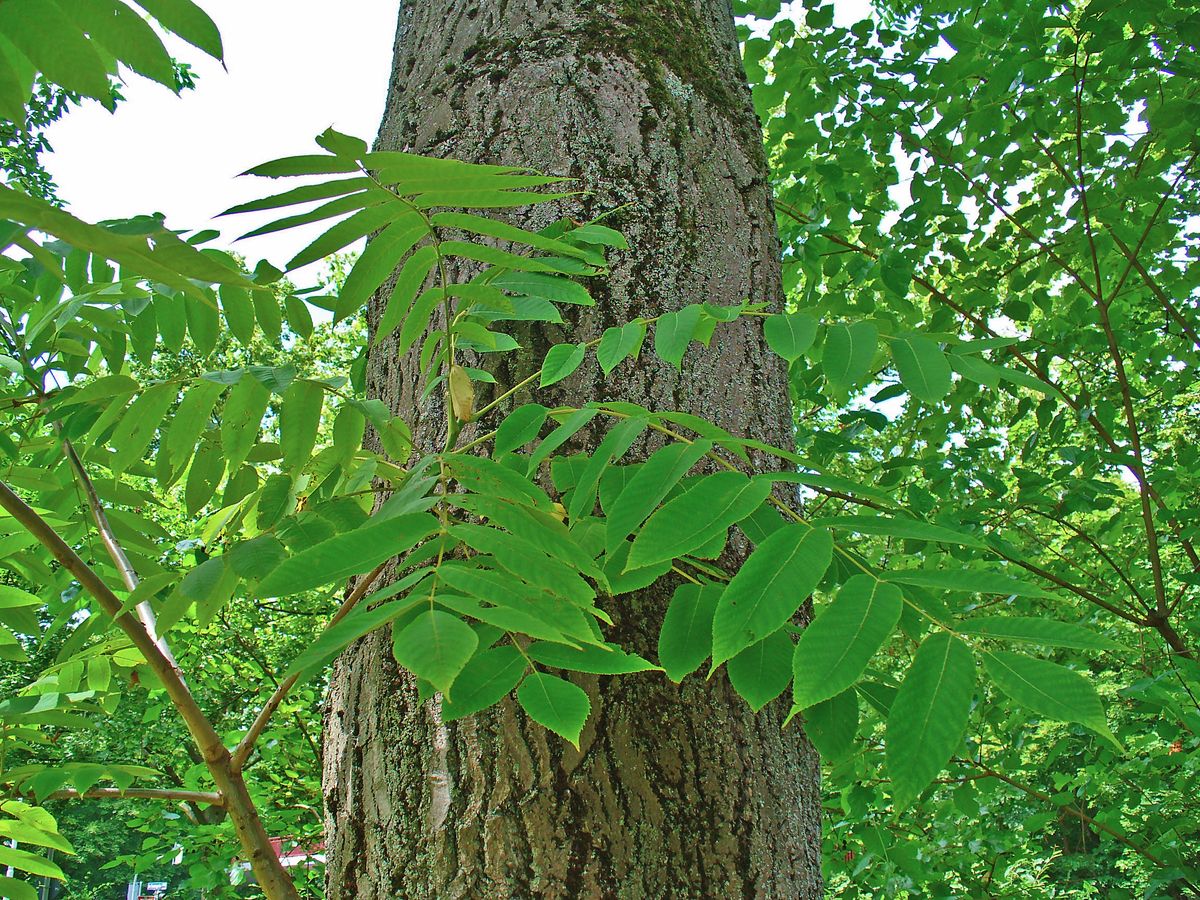
- Alternate , pinnately compound leaves with 11–17 leaflets, 40–70 cm long — fewer and broader leaflets than black walnut
- Terminal leaflet present and similar in size to lateral leaflets (unlike black walnut, where it is often small or absent)
- Sticky, hairy buds, leaf scars, and fruit husks — distinctly more pubescent than black walnut
- Elongated, oval nut (not round like black walnut) enclosed in a sticky, hairy husk
- Bark with flat-topped, smooth-surfaced ridges arranged in a broad diamond pattern
- Chambered pith inside twigs is dark brown (black walnut pith is tan)
Habitat
Rich, moist woods, stream banks, well-drained slopes, ravines, and mixed hardwood forests. Prefers deep, well-drained, fertile soils with a near-neutral pH.
Notes
Also called white walnut. Critically threatened by butternut canker (Ophiognomonia clavigignenti-juglandacearum), a lethal fungal disease that has killed the majority of trees across its range. Nuts are edible, sweet, and oily — historically important to Native Americans. Sap can be boiled into syrup. Bark and husks produce a brown-gold dye used to dye Confederate uniforms (butternuts) during the American Civil War.