Hygrophila polysperma
Hygrophila from Greek hygros (wet, moist) + philos (loving), meaning 'moisture-loving.' polysperma from Greek poly (many) + sperma (seed), referring to the numerous seeds produced.
Dwarf Hygrophila
Acanthaceae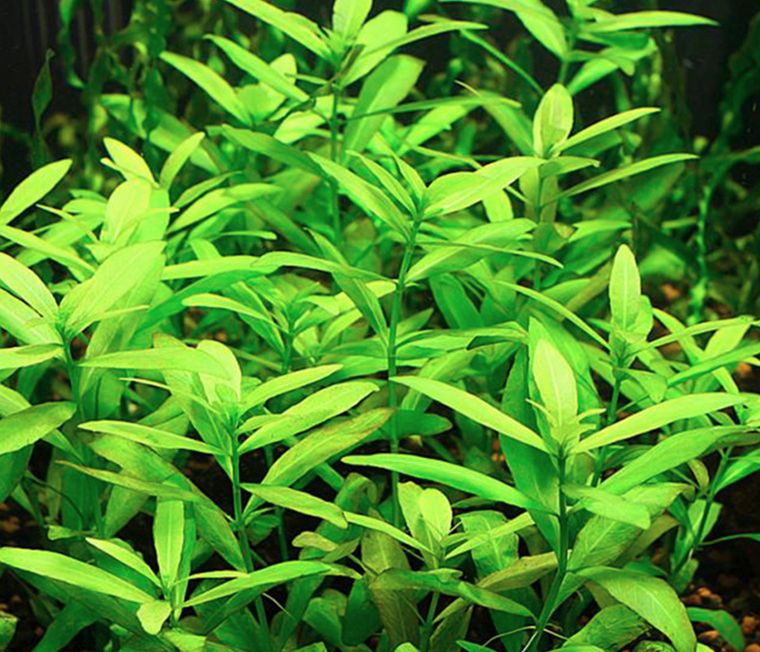
Distinguishing Features
- Opposite , decussate leaves — each pair at 90° to the pair below, giving a cross-shaped pattern from above
- Leaves elliptic to lanceolate , 2–5 cm long, light green (pinkish-brown at tops under high light)
- Stems smooth, round, green to pinkish, branching readily
- Extremely fast-growing — one of the fastest stem plants in the aquarium hobby
- Emersed form has darker, slightly hairy leaves with visible veining
- Small pale blue-white flowers in leaf axils (emersed form)
Habitat
Shallow freshwater: marshes, ditches, streams, and waterlogged soils. Grows submersed or emersed in tropical and subtropical wetlands.
Notes
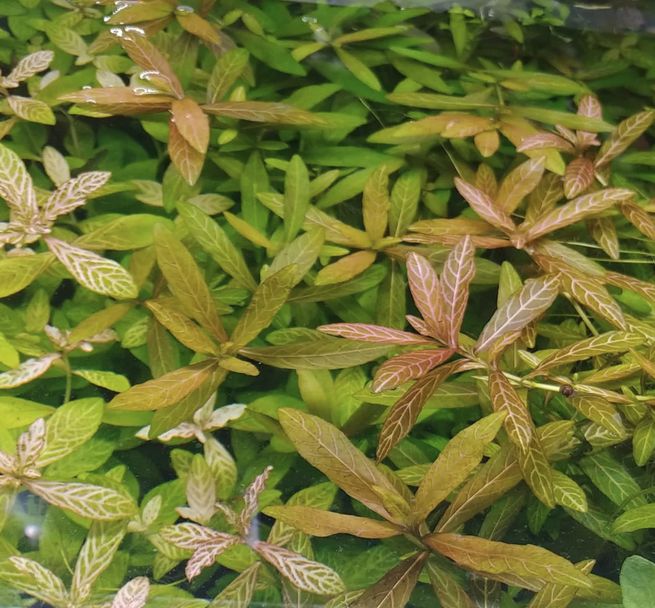
Considered one of the easiest aquarium plants to grow — nearly indestructible in any conditions. Federally listed as a noxious weed in the United States (banned from interstate sale) due to its aggressive invasiveness in Texas, Florida, and other southern states where it chokes waterways. Despite the ban, it remains widely traded among hobbyists. The 'Rosanervig' (sunset) variety has pink veins and is more ornamental but equally vigorous.