Hydrophyllum virginianum
Hydrophyllum from Greek hydor (water) + phyllon (leaf), referring to the pale blotches on the leaves that appear as water stains. virginianum meaning of Virginia, where the species was first collected.
Virginia Waterleaf
Hydrophyllaceae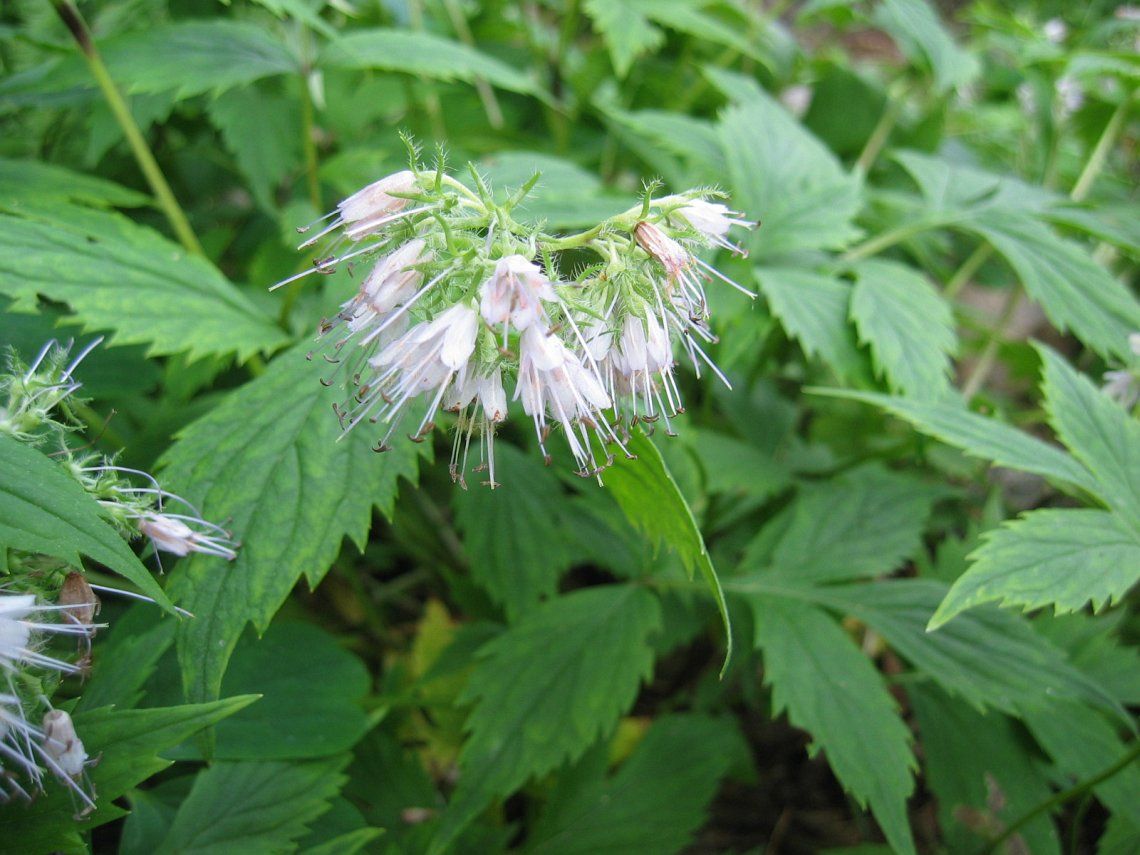
Distinguishing Features
- Pinnately divided leaves with 5–7 sharply toothed, pointed lobes ; lower leaves often with pale silvery-white blotches
- Clusters of white to pale violet bell-shaped flowers with conspicuously long, protruding stamens and pistil
- Flowers in scorpioid cymes (coiled clusters that uncurl as flowers open)
- Hairy stems, 30–80 cm tall
- Basal and lower leaves have the most prominent watermark-like mottling
- Spreads by rhizomes , often forming large colonies on the forest floor
Habitat
Rich, moist deciduous woods, ravines, floodplains, and shaded stream banks. Prefers humus-rich, slightly acidic to neutral soils.
Notes
Young shoots and leaves are edible and were used as a potherb by Native Americans — reportedly one of the better wild greens. The pale leaf mottling is a useful identification feature even when plants are not in flower. Can form extensive ground-cover colonies in suitable habitat.
Tags
Biogeography
Life Form
Phenology
Habitat
Ethnobotany