Hesperis matronalis
Hesperis from Greek hesperos (evening), referring to the flowers' intensified fragrance at dusk. matronalis from Latin matronalis (of or pertaining to married women), alluding to the Roman festival of Matronalia on March 1st, when the plant was traditionally associated with women and fertility.
Dame's Rocket
Brassicaceae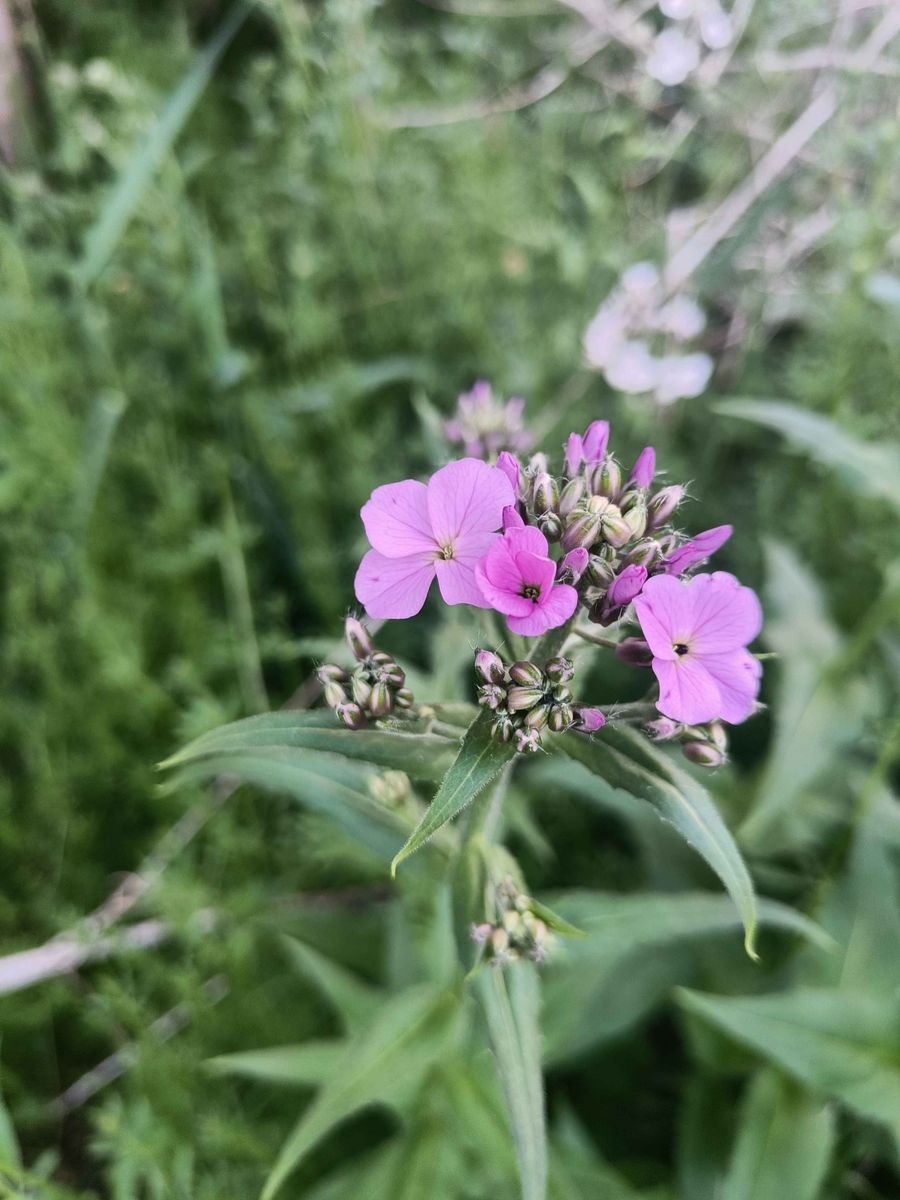
Distinguishing Features
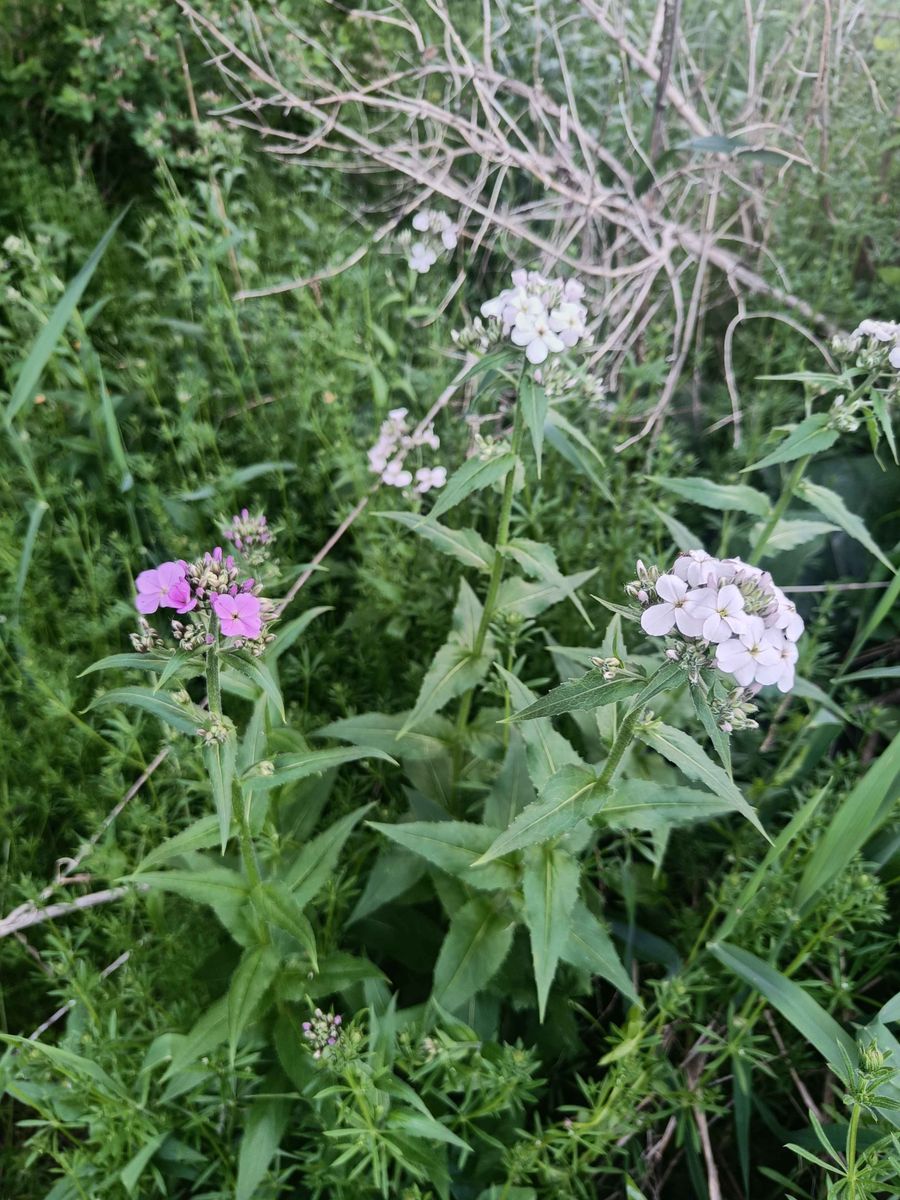
- Erect, branching biennial or short-lived perennial herb, 60–120 cm tall, with hairy stems
- Flowers with 4 petals arranged in a cross (cruciform, typical of Brassicaceae), each petal 1.5–2.5 cm long; color varies from lavender-purple to pink to white — always 4 petals (key distinction from phlox, which has 5)
- Flowers borne in loose, terminal racemes ; strongly fragrant, especially in the evening
- Leaves alternate , lanceolate to ovate, 5–15 cm long, sharply dentate , becoming smaller and sessile up the stem; lower leaves petiolate
- Fruit a long, narrow silique (5–14 cm), ascending, slightly constricted between seeds; typical Brassicaceae pod
- Taproot present in first-year rosette ; short-lived — individual plants typically die after flowering in their second or third year, but self-seed prolifically
Habitat
Roadsides, ditches, stream banks, forest edges, open woodlands, meadows, and disturbed ground. Prefers partial shade and moist, rich soils but highly adaptable. Often found in large, showy colonies along rural roads.
Notes
Frequently mistaken for native phlox (Phlox species), but reliably distinguished by its 4 petals (phlox has 5) and alternate leaves (phlox has opposite leaves). Despite its beauty and fragrance, dame's rocket is classified as invasive in many North American jurisdictions because it aggressively colonizes roadsides, floodplains, and woodland edges, displacing native wildflowers. Still sold and planted as a garden flower and included in wildflower seed mixes, which contributes to its spread. The evening fragrance serves to attract night-flying pollinators, particularly moths.