Hamamelis virginiana
Hamamelis from Greek hama (together with) + melon (fruit or apple), referring to the unusual co-occurrence of flowers and mature fruit on the branch simultaneously. virginiana meaning of Virginia.
Witch Hazel
Hamamelidaceae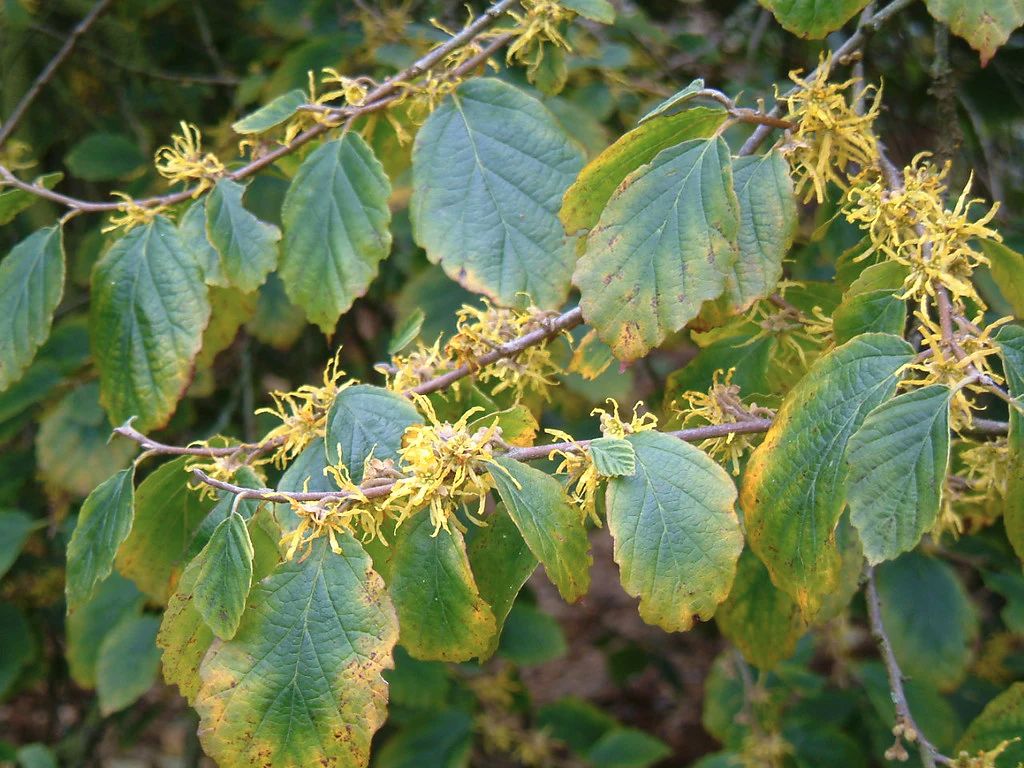
Distinguishing Features
- Wavy-margined, broadly oval leaves with asymmetrical bases and coarse, rounded teeth, 7–15 cm
- Spidery yellow flowers with four narrow, ribbon-like twisted petals, 1–2 cm long, blooming in autumn after leaf drop
- Woody capsule fruit that takes a full year to mature; explosively dehiscent, shooting two black seeds up to 10 metres
- Crooked, spreading, irregular branching habit; understory tree or large shrub, 3–8 m tall
- Bark smooth, light brown to gray, with scattered lighter patches
- One of the very last plants to bloom in the growing season — often flowering into December
Habitat
Understory of deciduous woods, rocky slopes, stream banks, and north-facing ravines. Shade-tolerant. Prefers moist, acidic, well-drained soils.
Notes
Commercially important: distilled witch hazel extract (hamamelis water) is a widely used topical astringent for skin care. Forked branches were traditionally used as divining or dowsing rods (witch may derive from Old English wych, meaning bendable). One of very few North American woody plants that bloom in late fall.
Tags
Biogeography
Life Form
Phenology
Habitat
Ethnobotany