Fragaria vesca
Fragaria from Latin fragum (strawberry) or fragrans (fragrant), referring to the aromatic fruit. vesca from Latin vescus (thin, feeble) or vescor (to eat, to feed on), emphasizing the edible nature of the fruit.
Wild Strawberry
Rosaceae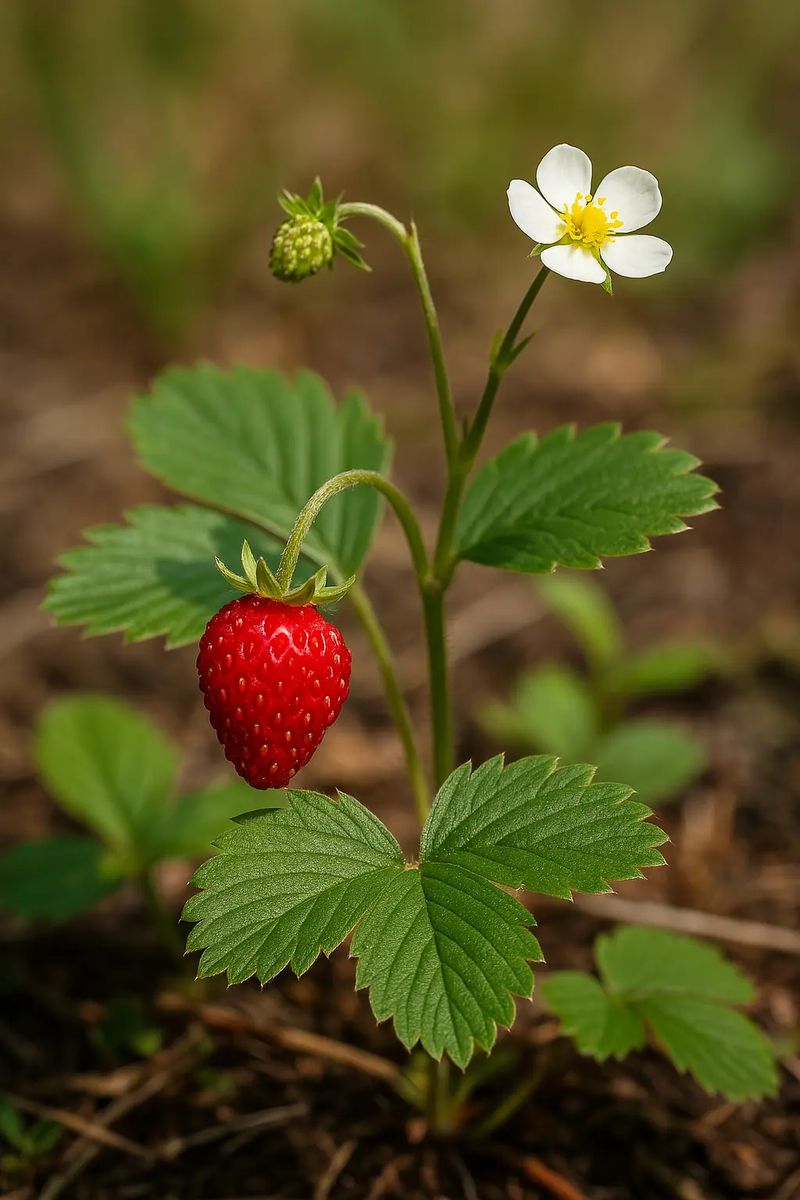
Distinguishing Features
- Trifoliate leaves with three sharply serrated , bright green leaflets
- Small white 5-petaled flowers held at or above leaf level on slender stalks
- Small red fruit (5–15 mm) with achenes (seeds) sitting on the surface, not embedded
- Fruit separates easily from the calyx when ripe; achenes project from the surface — key difference from F. virginiana where achenes sit in pits
- Spreads by slender stolons (runners), forming loose patches
- Terminal tooth of leaflet is typically as long as or longer than adjacent teeth
Habitat
Woodland edges, open woods, rocky slopes, meadows, trailsides, and partially shaded banks. Prefers well-drained, humus-rich soils.
Notes
Fruit is much smaller than cultivated strawberries but intensely aromatic and flavourful. The cultivar group Semperflorens (alpine strawberry) is derived from this species and produces fruit from spring to frost. A common and widespread but often overlooked wild edible.
Tags
Biogeography
Life Form
Phenology
Ethnobotany