Asimina triloba
Asimina from the French or Spanish adaptation of the Powhatan (Algonquian) name assimin or rassimin for the fruit. triloba from Latin tri (three) + lobus ( lobe ), referring to the three- lobed calyx .
Pawpaw
Annonaceae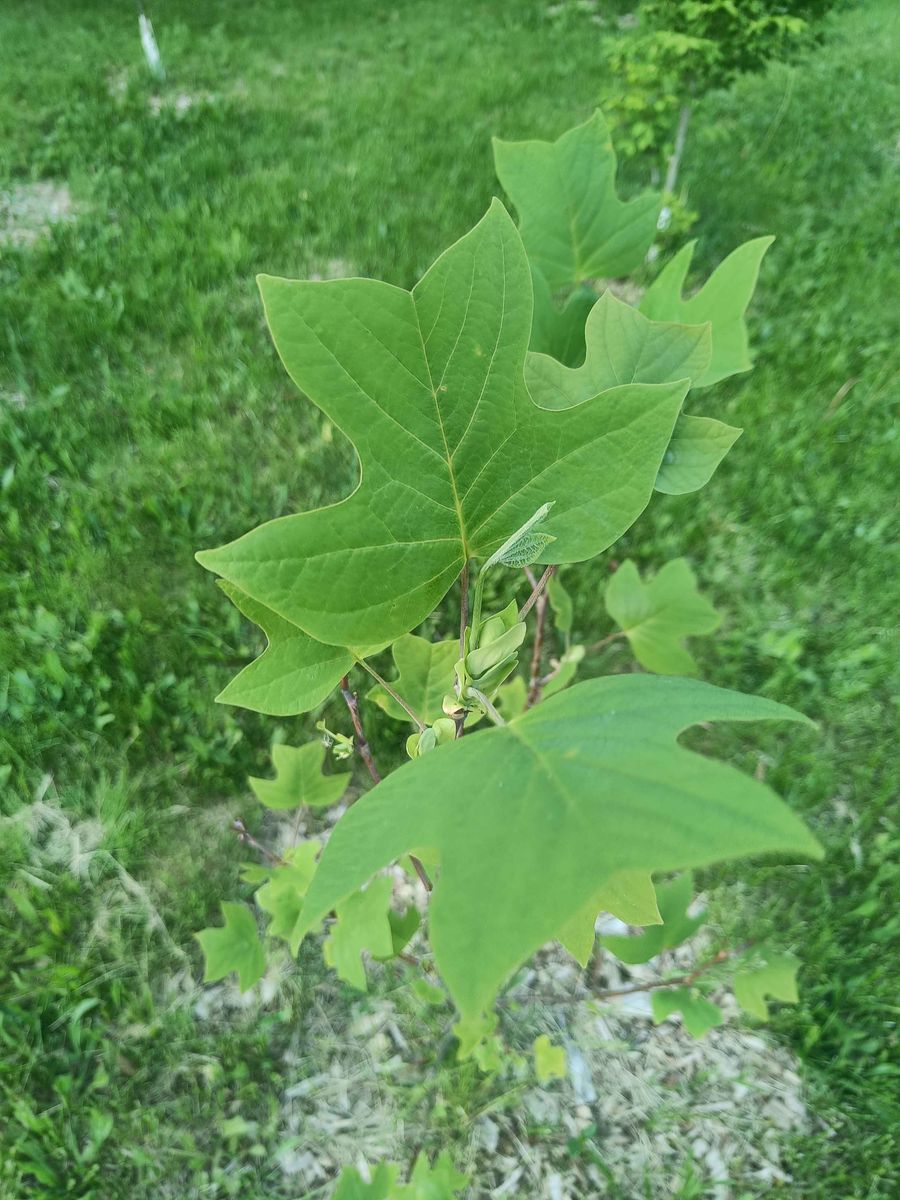
Distinguishing Features
- Large, drooping, tropical-looking leaves (20–30 cm), obovate, clustered at branch tips — the largest simple leaves of any native temperate North American tree
- Maroon to dark purple flowers with 6 fleshy petals in two whorls of 3, appearing before or with the leaves
- Large, yellowish-green to brown fruit (5–15 cm), oblong-cylindrical — the largest edible fruit native to North America
- Fruit flesh is creamy yellow, custard-like, with a tropical flavour (banana-mango)
- Large, dark brown, bean-like seeds (2–3 cm) embedded in the pulp
- Forms dense clonal thickets via root suckers; small tree, 5–12 m
Habitat
Rich, moist bottomlands, floodplains, ravines, and understory of hardwood forests. Prefers deep, fertile, well-drained soils. Shade-tolerant but fruits best in sun.
Notes
Fruit is a prized wild edible with a tropical custard flavour, but it does not store or ship well, limiting commercial availability. Flowers are pollinated primarily by flies and beetles attracted to the faint carrion-like scent — not by bees. Host plant for the zebra swallowtail butterfly (Eurytides marcellus). Growing rapidly in popularity as a specialty fruit crop.
Tags
Biogeography
Life Form
Phenology
Ethnobotany
Ecology