Ammannia capitellata
Ammannia honoring Paul Ammann (1634–1691), German botanist and professor at the University of Leipzig. capitellata from Latin capitellum (small head), referring to the compact, head-like clusters of flowers in the leaf axils .
Cogswamp Toothcup
Lythraceae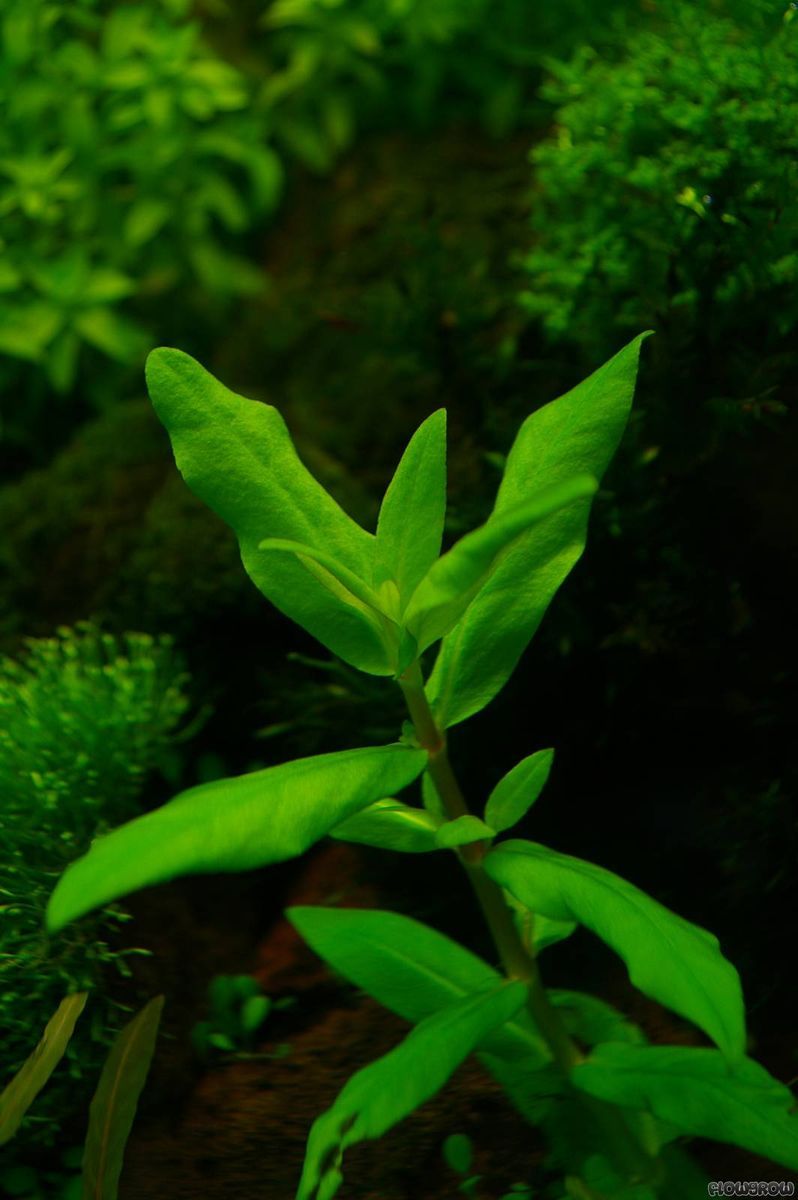
Distinguishing Features
- Opposite , sessile , lanceolate to linear leaves, 2–5 cm long, clasping the stem
- Stems square in cross-section (characteristic of Lythraceae), erect, branching
- Small pink to purple flowers in dense, sessile clusters (glomerules) in the leaf axils
- Under high light, leaves and stems develop reddish-pink to deep rose coloration
- Growth habit upright, moderate pace, 20–40 cm tall in aquaria
- Leaves thinner and more linear than A. pedicellata; overall more delicate appearance
Habitat
Seasonal tropical wetlands, rice paddies, pond margins, and shallow freshwater. Grows emersed or submersed in warm, nutrient-rich water.
Notes
Less commonly available in the aquarium trade than Ammannia pedicellata or A. gracilis, but valued for its fine texture and red coloration under strong light. Like other Ammannia species, benefits from high light, CO2 injection, and iron supplementation for best color. The compact flower clusters in the leaf axils distinguish it from A. pedicellata (which has stalked flowers). Propagated by cuttings.