Acer saccharum
Acer from Latin acer (sharp), likely referring to the hard wood once used for spear shafts. saccharum from Latin/Greek saccharon (sugar), referring to the sweet sap used to produce maple syrup.
Sugar Maple
Sapindaceae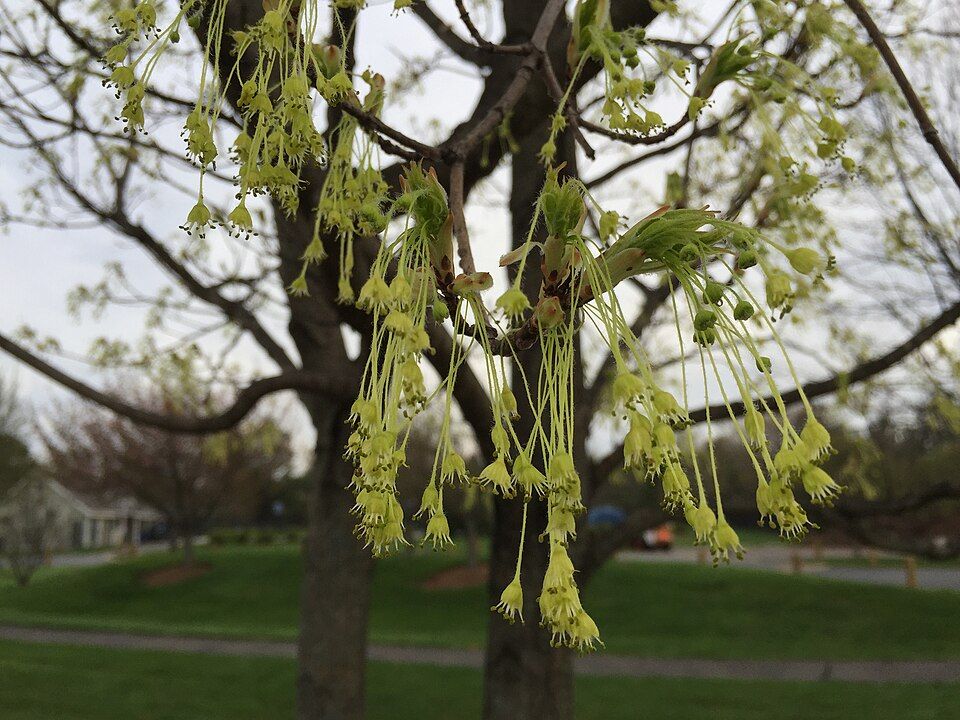
Distinguishing Features
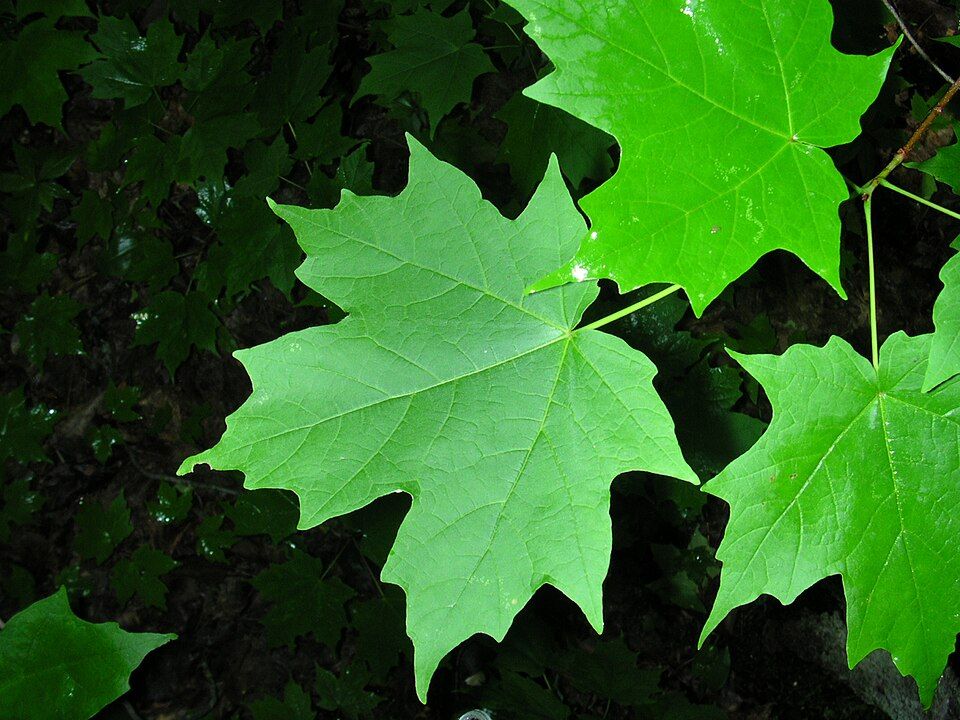
- Leaves 5- lobed with smooth margins and rounded, U-shaped sinuses — not deeply cut like silver maple
- Leaf undersides are paler green but not silvery — lacks the bright white flash of silver maple
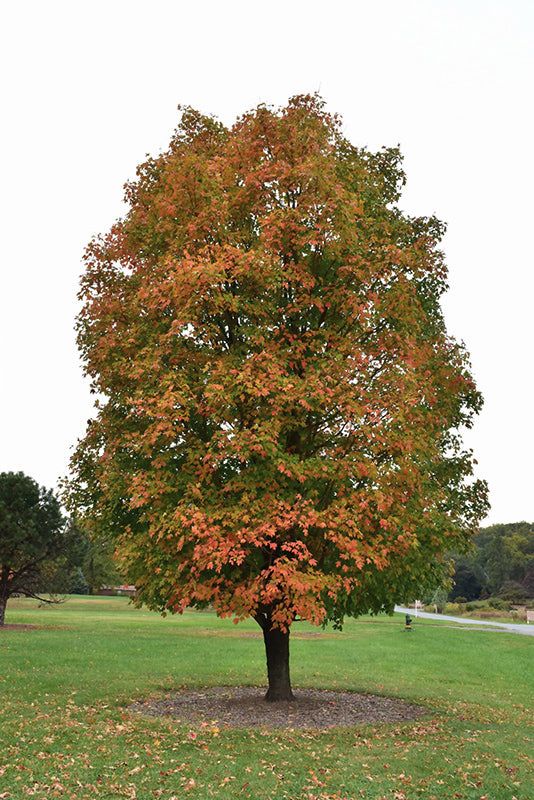
- Spectacular fall colour ranging from yellow to orange to brilliant red, often on a single tree
- Bark on mature trees develops long, irregular vertical plates with deep furrows, becoming shaggier with age
- Flowers greenish-yellow in drooping clusters, appearing in April–May with or just before the leaves
- Paired samaras nearly parallel to horseshoe-shaped, 2–3 cm long, ripening in autumn
- Slow-growing, long-lived canopy tree reaching 25–35 m; dense, rounded crown
- Opposite leaf arrangement and branching — typical of all maples
Habitat
Rich mesic upland forests on well-drained, fertile soils; dominant canopy tree in northern hardwood forests alongside beech and yellow birch. Shade-tolerant, especially as a sapling.
Notes
The primary source of maple syrup — roughly 40 litres of sap yields 1 litre of syrup. The leaf silhouette is the basis of the Canadian flag. Extremely valuable hardwood lumber used for flooring, furniture, and musical instruments. A keystone species of the northern hardwood forest ecosystem.
Tags
Biogeography
Life Form
Phenology
Ethnobotany
Misc