Acer saccharinum
Acer from Latin acer (sharp), likely referring to the hard wood once used for spear shafts. saccharinum from Latin saccharon (sugar), alluding to the sweet sap — though far less sweet than that of sugar maple.
Silver Maple
Sapindaceae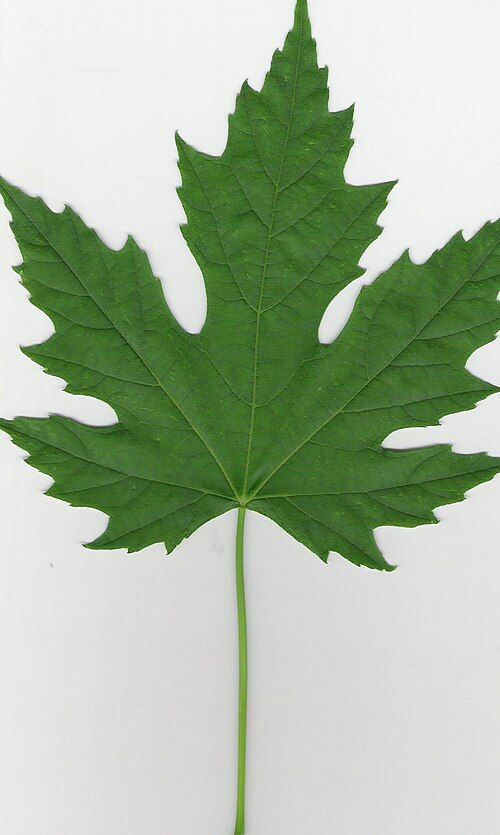
Distinguishing Features
- Leaves deeply 5- lobed with deep, narrow sinuses cutting more than halfway to the midrib — much more dissected than sugar maple
- Leaf undersides are conspicuously silvery-white, flashing in the wind — the key field character
- Bark smooth and silvery-grey on young trees, becoming shaggy and flaking in long strips on mature trunks
- Among the earliest trees to flower in spring (February–March), producing small reddish clusters well before leaves emerge
- Samaras are the largest of any native maple, 4–7 cm long, widely divergent, ripening in late spring
- Fast-growing with brittle wood; often develops multiple leaders and is prone to storm damage
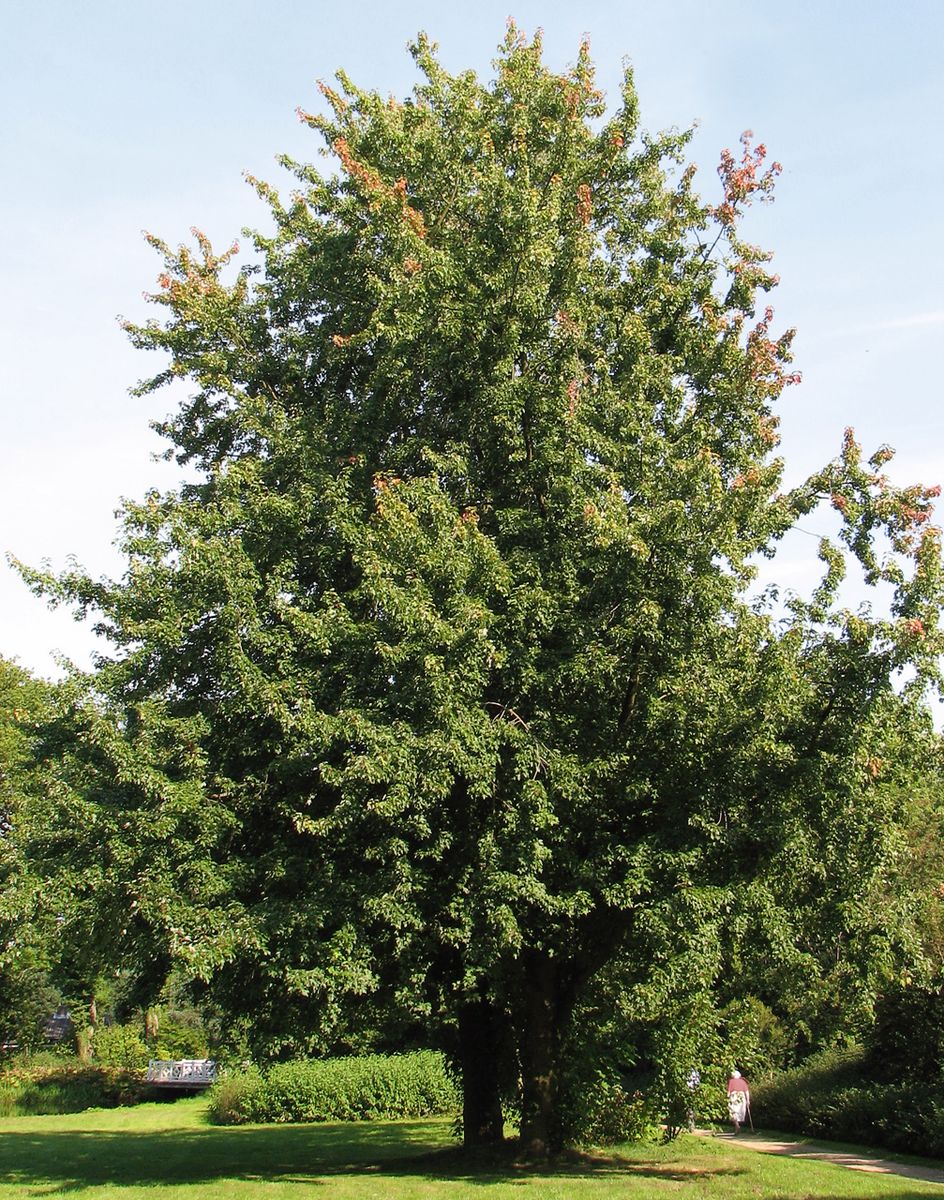
- Mature trees to 25–35 m tall with a broad, open, irregularly shaped crown
Habitat
Floodplains, stream banks, lakeshores, and wetland margins; thrives in moist to wet soils and tolerates periodic flooding. Commonly planted as a street tree despite its brittle wood.
Notes
Often confused with sugar maple — the deeply cut leaf lobes and silvery undersides are the quickest way to tell them apart. Sap can be tapped for syrup but has lower sugar content than sugar maple, requiring roughly twice as much sap. Prolific seed producer and aggressive self-seeder.
Tags
Biogeography
Life Form
Phenology
Habitat
Ecology